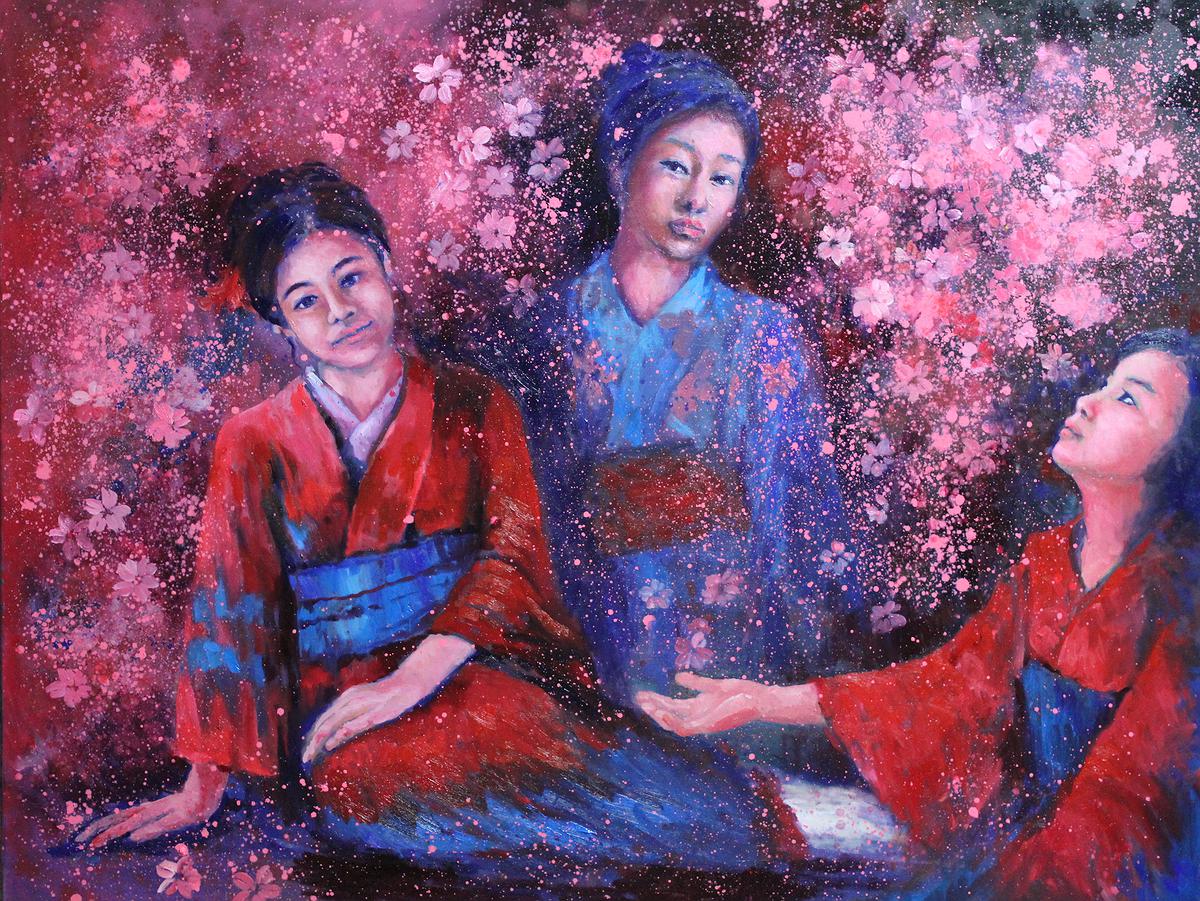
The theme of this art works dissertation “Spiritual Trail and Floral Ripples” explores the metaphorical images of life with flowers from the great nature, voicing the mood behind woman thinking; by presenting the beauty of rhythm with the oil paintings and poetic expressions behind them, the works imply that human life resembles the colorful blossoming of flowers thriving in the world. Colors in day-to-day living come from colorful ripples of flowers, and render the touching feeling of the great nature with pleasure. Behind the works, “Spiritual Trail and Floral Ripples”, is a passion and desire to depict the fascinating floral ripples encountered in the changeable world by making the most out of the mastery of oil painting techniques; mirroring the moody mind of women and telling a poetic legends nothing short of flowers.
With these works the artist explores the wonder space profoundly hidden in the soul, and the enrichment from the flowers to the changeable emotions of women; the works present the trail of women,s feelings and memories and serve as a cry or even snarl from the inside deep down in the mind. Methodologically this study begins with literature review, and develops with the 4 series of art works named “Spiritual Trail and Floral Ripples” expressing the glamorous vitality, and next explores the artistic values behind the works. Further, the study focuses on the style of the works under the theme which make good use of flower vocabulary to resemble the moods and emotions and take it as the basis on which the art works is created practically, so as to verify and evidence the obvious variety of the representations in the art works. Finally the study analyzes the works of artist and defines the content and expression forms at the same time, and furthermore establishes the distinctive poetic and painting vocabularies of the artist,s own.
This dissertation falls into five chapters, Chapter 1. Introduction: origin, motivation, purpose and the procedure, framework and methods for the works study; Chapter 2. Review and Analysis: Theoretical bases and Literatures; Chapter 3. Fundamental Explanation: Ideals and Forms analyses; Chapter 4. Specific Explanation: The Course of Creation and Details of the 26 works; and Chapter 5. Conclusion and Prospect: For upcoming researches and works.