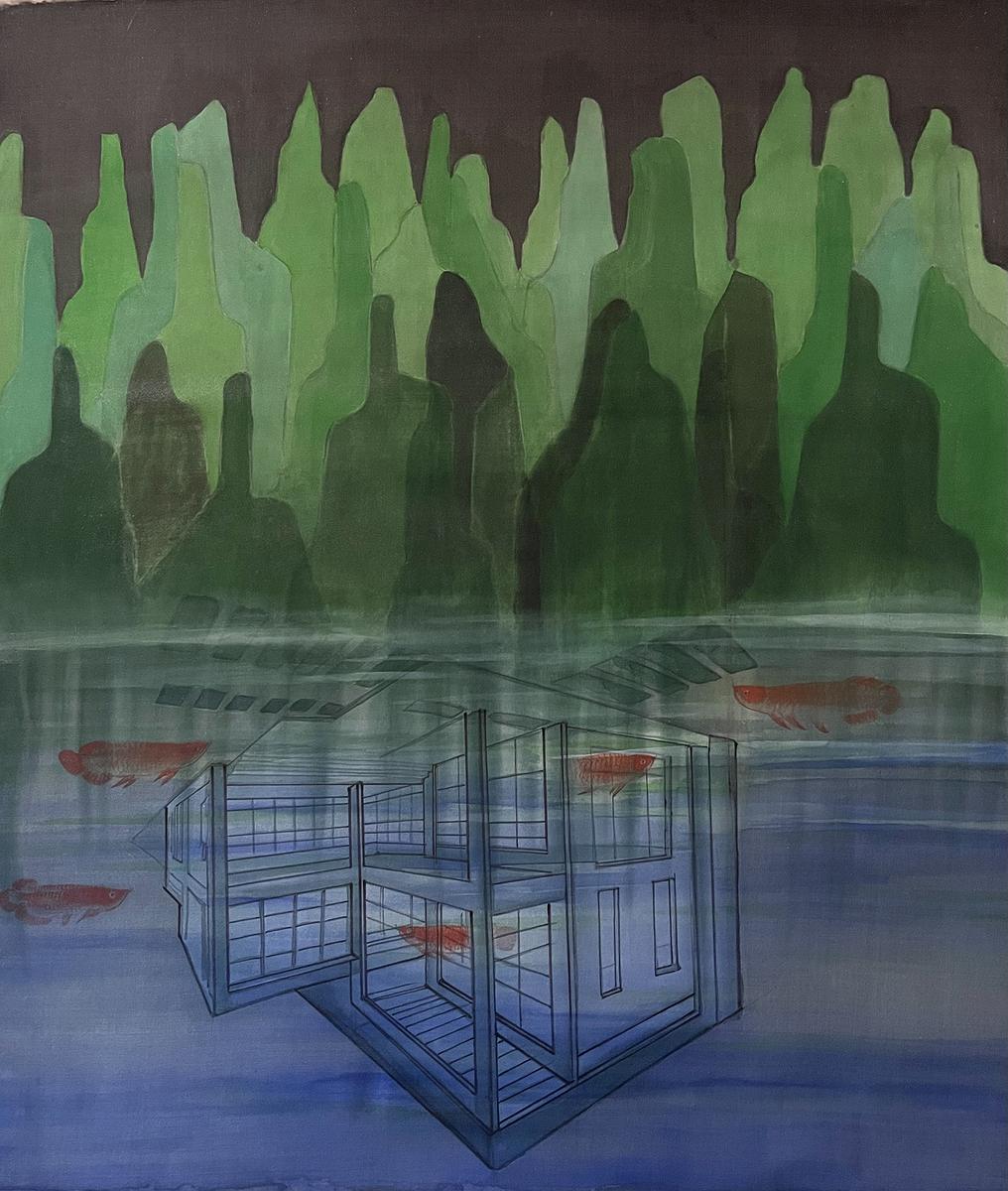
The theme of this thesis is " Ink Bouncing with Playful Spirit " ink wash painting creation, which is a record of the author's views on life and an expression of his perception of life. Living in the space of the environment has undergone great changes, and it develops with the progress of social civilization and the renewal of generations.
The author uses living space as the subject of creation because the familiarity with space arouses emotions, space develops in the constant innovation and change of people, and it has the characteristics of the times, and the architectural form of the city is also the most profound. Through creation, I hope to convey the author's feelings of exploring and creating situations in the city, and travel with ink. As a creative element, You Xin attempts to see through the nature of objects and images in the urban landscape environment, inspires creative inspiration from the observation of space life, and combines multiple techniques to interpret spatial images and the humanistic spirit of the times,follow academic cognition to practice creative ideas, collect sages and contemporary Relevant works of famous artists, understand the expression of today's space, and create thought lines, statement forms and expression techniques.
In this creation discussion, the first chapter is an introduction, starting from the motivation and purpose of creation, talking about the content and scope of creation, method steps and definition of terms. The second chapter is the theoretical basis of creation. By reading the aesthetic education booklets and understanding space, ink bouncing with playful spirit, the interpretation of western aesthetic views and spatial structure is carried out to help the author find the connection between theory and creation, and analyze his own creation. status, as well as the context of creation. The third chapter is the creation concept and practice, from the creation concept to the of formation painting language, a deeper understanding of the content of the works, and analysis and explanation of famous artists. The fourth chapter describes in detail the creative concepts and expressive techniques of the three series of works. The fifth chapter is the conclusion, reviewing the experience of this creative research. During the research process, whether the research goal has been achieved, and what is missing in the creative process, is discussing, and the reflection and expectation of self-creative development in the future.