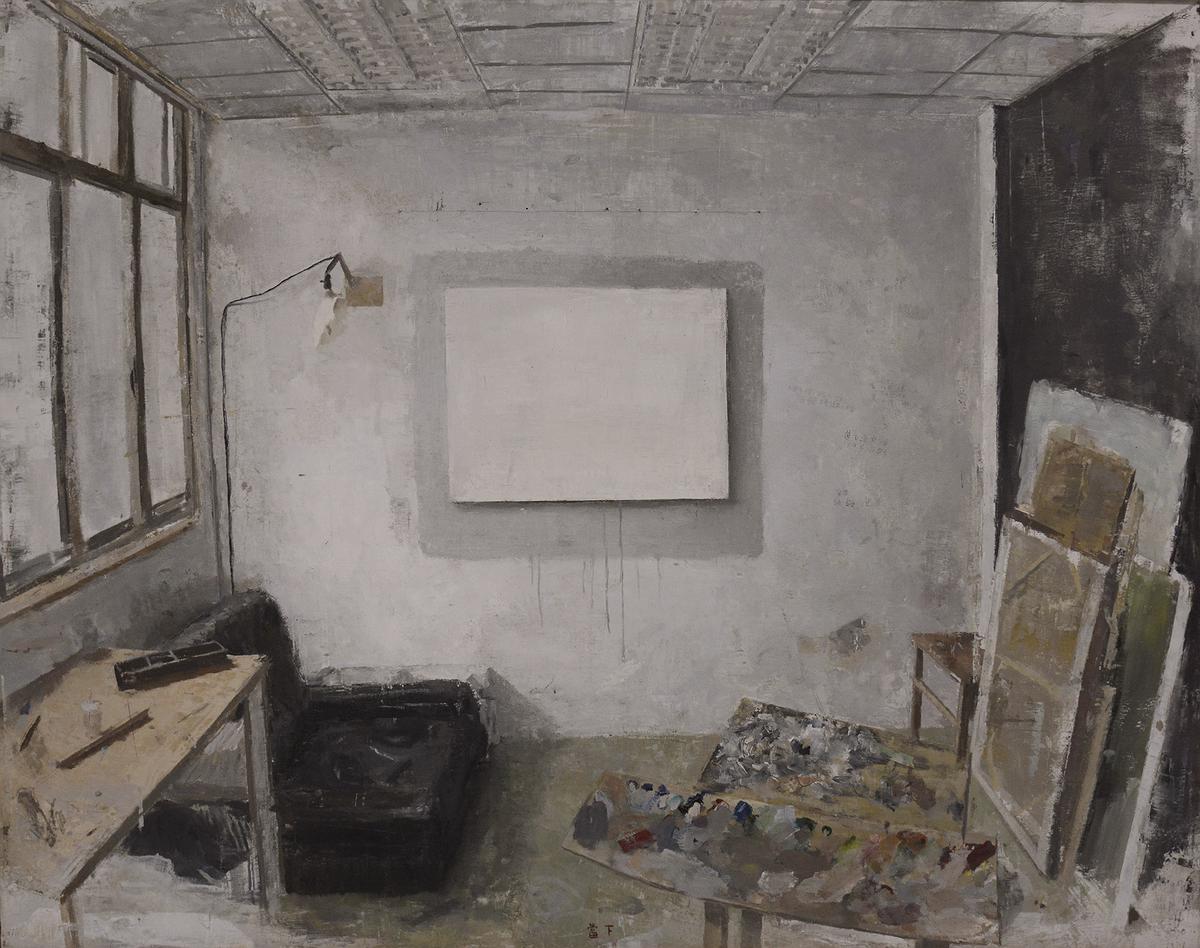
This study aims to illuminate my own thoughts on the creative process itself. Academic language usually interprets a work from the vantage points of the discourse and environment of the pertaining era, art history contexts, the artistic creative process, and the creator’s viewpoint. However, I intend to proceed from the perspective of a practicing artist as a “human”: although I cannot completely detach the subject and the identity of the artist to form a discussion that is theoretically more objective, I hope that, in the real world where identity as a human goes in tandem with identity as an artist, I can effectively analyze the issue of executing a creative process, whereby the subject on the scene of an artwork can have a clearer grasp in any problems that may arise, in terms of many of the questions an artist must face, such as: What do I want to create? Why do I want to create? What does it mean to “create”? What does “to create” mean to me? What does “meaning” mean?
Compared to the moment of affecting, we experience a delay in the affecting of our cognition, and therefore a creator must constantly pry deeper in challenging cognition. Only when one is unsure—even slightly—during the creative process, can one have the chance to dig deeper, and so the sentiments offered by the artistic creation steadily edges closer to its boundaries, so as to evoke a deeper state of emotions or moods. This is no doubt a dilemma for the artist, yet when faced with this dilemma, the actor of the creative process (i.e. the artist) and his/her relationship with the process itself and/or the work is in itself another question waiting to be addressed. Is the artistic work a form self-healing for the artist? Is it a response to art history? Is it to highlight the features of contemporary society? Is it an embellishment? Is it a product of art for art’s sake?
The present study attempts, in beginning with the anxiety of existence itself in the cognitive mind, to clarify the subject of the creative activity, and the interactions between the work and its objects (i.e. external environments), thereby sorting out a perspective born out of observations from personal experience, and obtaining a “point of harmony” (i.e. the work) from “intuitive selection.” The value of the present study is realized if such thoughts on the creative process can serve as a dimension for reference in related research.