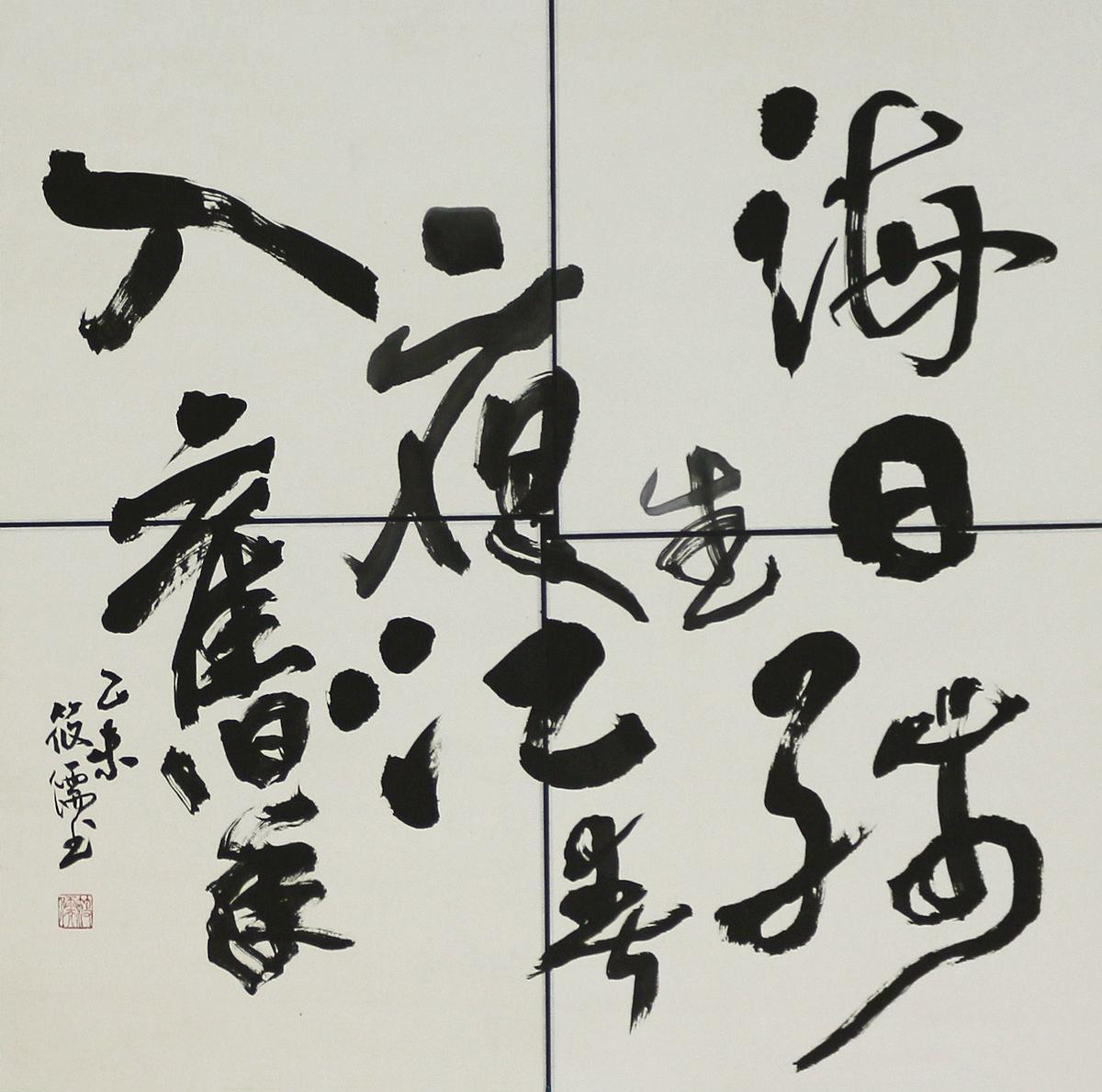
In regards to Shang Fa, or the preferences of rules, in Tang Dynasty, relevant documentation and argumentation can be seen in “Golden Stone Epigraphy” in Song dynasty and works of Dong Qi-chang and Feng Ben, two of the famous calligraphers in Ming dynasty. Later in Qing Dynasty, Liang Yan specifically pointed out in his “Comments on Calligraphy”: “Jing stresses verve; Tang prefers rules (Tang Shang Fa); Song favors meanings; Yuan and Ming feature figures.” Tang Shang Fa is then concluded to be the aesthetic essence of Tang calligraphy. The purpose of this essay is to discuss whether the awareness of Shang Fa can also be observed in Tang paintings.
This article analyzes the perception of Shang Fa seen in related literature in Tang Dynasty and infers that in Tang paintings, there is a conceptual equivalence of Shang Fa in Tang Calligraphy. Then, from the approach of “Laws” discussed in the painting theory, the essay will interpret the practice of the Fa (rules) awareness in Tang paintings.
In Chapter 2, the style of Tang calligraphy and Tang paintings will be put side by side for comparison and discussion: Fa in calligraphy refers to the order and rules to follow, while the formation of different “Family Styles” generates a huge impact on Tang paintings. One trait the two styles have in common is that they both started developing at the mature stage of a form of arts. In terms of social and historical backgrounds, the preference and support of the emperor is a crucial factor in both calligraphy and painting styles. In Chapter 3, figure paintings will be analyzed in terms of its patterns in styles, posture, line quality, coloring, composition, etc. In Chapter 4, the realization of Fa is approached from another angle: the content of Tang paintings reflect their real lives. And it applies to the entire country instead of certain geographical areas. Then, Chapter 5 summarizes the styles and features of Shang Fa in Tang figure paintings. Finally, since there are only a few Tang paintings survived to date, and for most of them, their authenticity still remains controversial, this essay thus includes tomb murals, pottery figures, and historical relics in Shosoin of Japan, etc., which are valuable supportive research materials for this research.