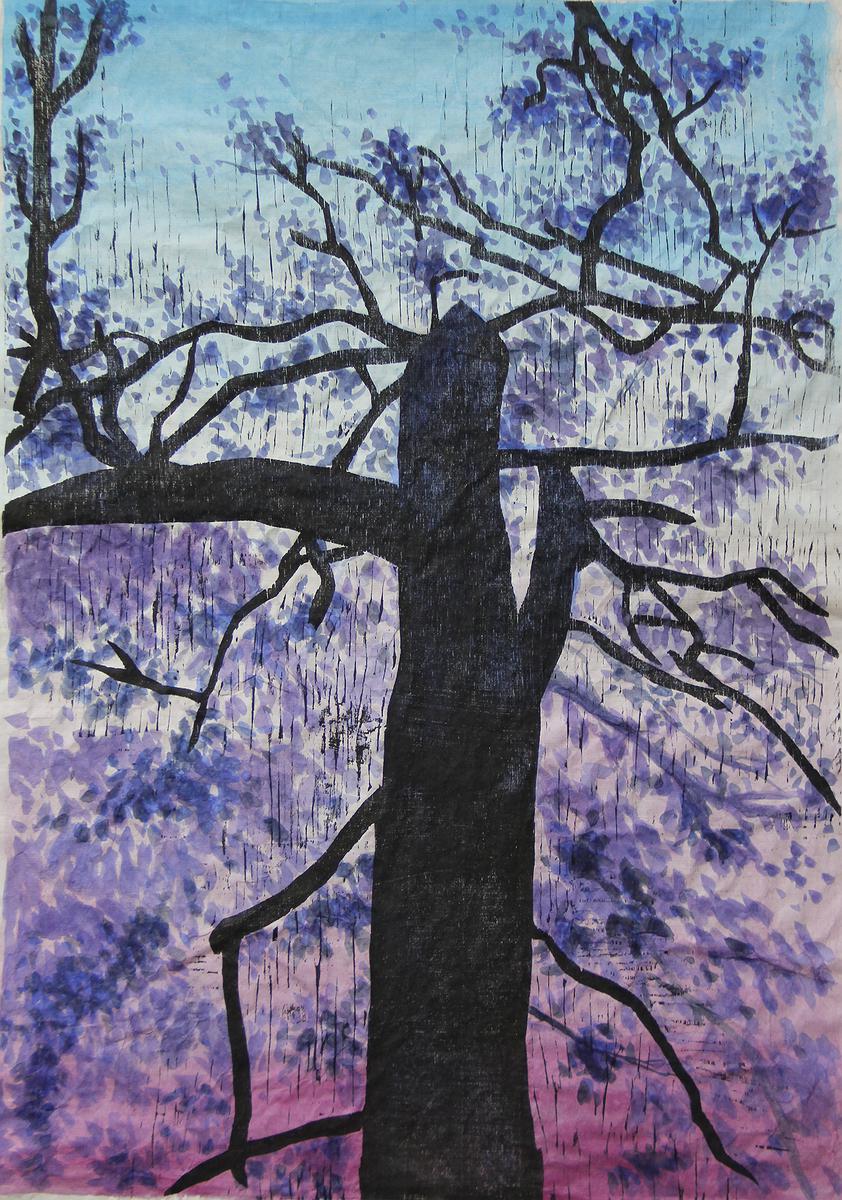
The trees appears during 350 million years ago. Plants’s grown effect the atmosphere, change the environment that animals live. We can know people have reference of trees by mythology of old civilization, and now it become psychology.
This creative is following subject matter of tree. It was from my own experience of metaphor to discuss the meaning of life and death. There are 5 chapters. In Chapter 1, creation of beginning.I will discus that I choose trees for my creation symbol and emotional link from college until laboratory. Chapter 2,listed 3 artists was Andrew Wyeth(1917-2009), Piet Mondrian(1872-1944) and Kaii Higashiyama(1908-1999) who have subject matter of tree then analysis means of creation, creative form and link with the painter.
The third chapter is about the historical context of the image of trees in the art of tombs. From the origin of images in ancient civilizations, the symbolic meaning of trees in religious classics to the source of images in art history, the concept of life and death represented by images is analyzed.
Chapters 4 and 5 are creative practices. Due to the different methods and forms, it is divided into two chapters. The fourth chapter is based on the two series of "Thinking Jade Land" and "Specialty Tree". Explain the evolution, form, and use of media in the course of its own creation.
The Chapter 5 discusses the formal vocabulary of the series of "Remaining Figures" and "Transmutation of Rebirth" and makes a comparative analysis of the art of tombs, the expression techniques of portrait stones, portrait bricks and their own creative techniques.
The Chapter 6 is conclusion. To make a summary for the discussion, I will review the direction of this article and the presentation of its own creative achievements.