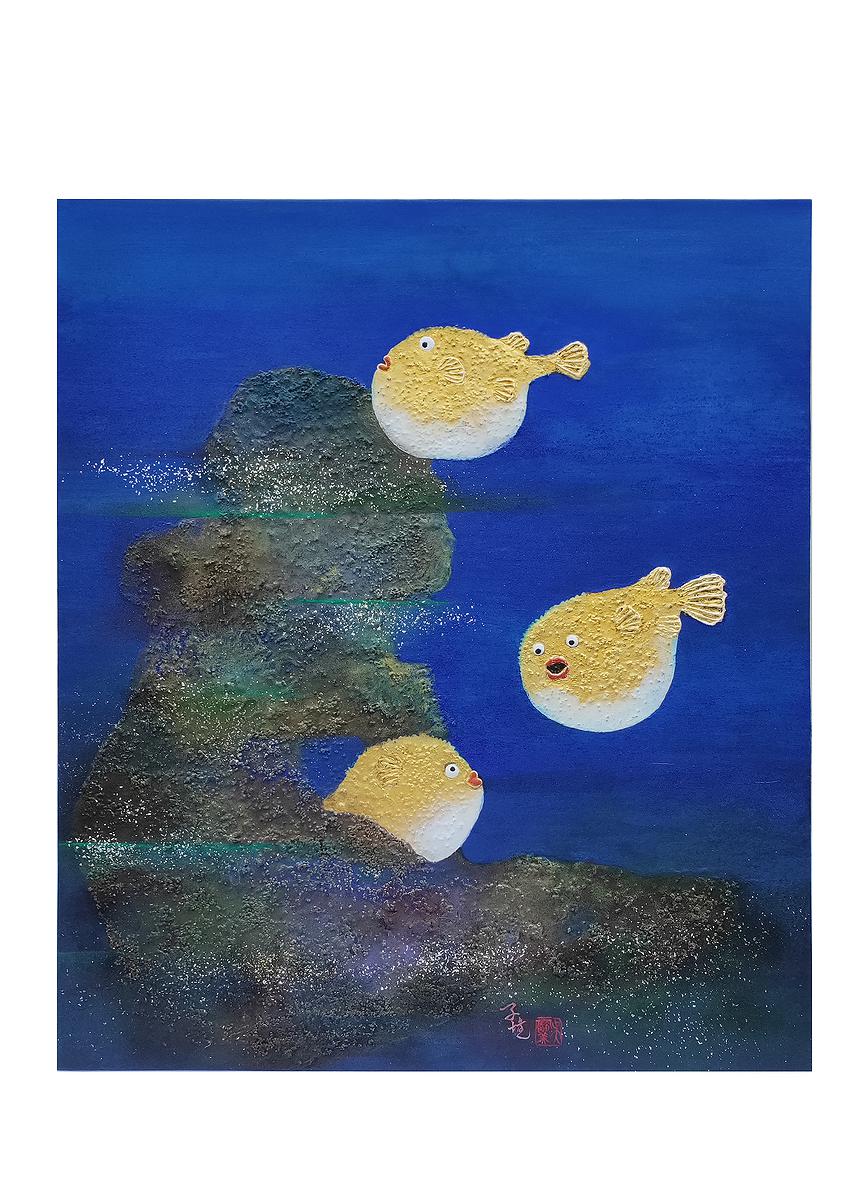
Glue painting is a genre of painting using glue blended with mineral pigments, which give the painting an enduring luster. Glue painting in Taiwan is characterized by its diverse cultural integration. After experiencing post-war “Legitimate Chinese Painting” contention in 1950s, Hsu Shen-Chou’s works were once again applauded and shined gloriously, marking the second peak in Taiwan’s development of glue painting. Glue painting has been in Taiwan over a century and has become a special feature exclusive to Taiwanese paintings. With a succession of new artists entering this field, it has evolved into a painting medium with great potential.
Hsu Shen-Chou (1918-2005), the focus of this study, grew up in a time of cultural transformation, and his style of glue painting is a blend of Western and Chinese techniques. Hsu’s painting fuses humanistic thinking and reflects cultural landscapes at the time, besides revealing his sentiments for Taiwan. His works brim with Eastern aesthetics and Taiwan’s native folk attainments.
Here is the table of content:
Chapter 1: Introduction
Chapter 2: Hsu Shen-Chou’s life and anecdotes and painting backgrounds of his time
Chapter 3: Hsu Shen-Chou’s teachers and artistic conceptions
Chapter 4: Characteristics of Hsu Shen-Chou’s glue painting and some of his works
Chapter 5: Conclusion: Heritage and impact of Hsu Shen-Chou’s glue painting
Hsu Shen-Chou’s creation begins with his visual experience with a focus on outdoor sketching of Taiwan’s native folk culture. Despite external restrictions, Hsu was never confined by traditions. Given the impact of Western modern art, Hsu persisted with attempts at new brush techniques, studying the composition, colors and aesthetics so as to elevate his art to another height. Hsu kept on improving his painting and his personal depth as an artist. His works are infused with Taiwan-specific qualities, while reflecting the time he lived in and its spirit. Hsu’s relentless pursuit for excellence in art is well worth emulating by later generations.