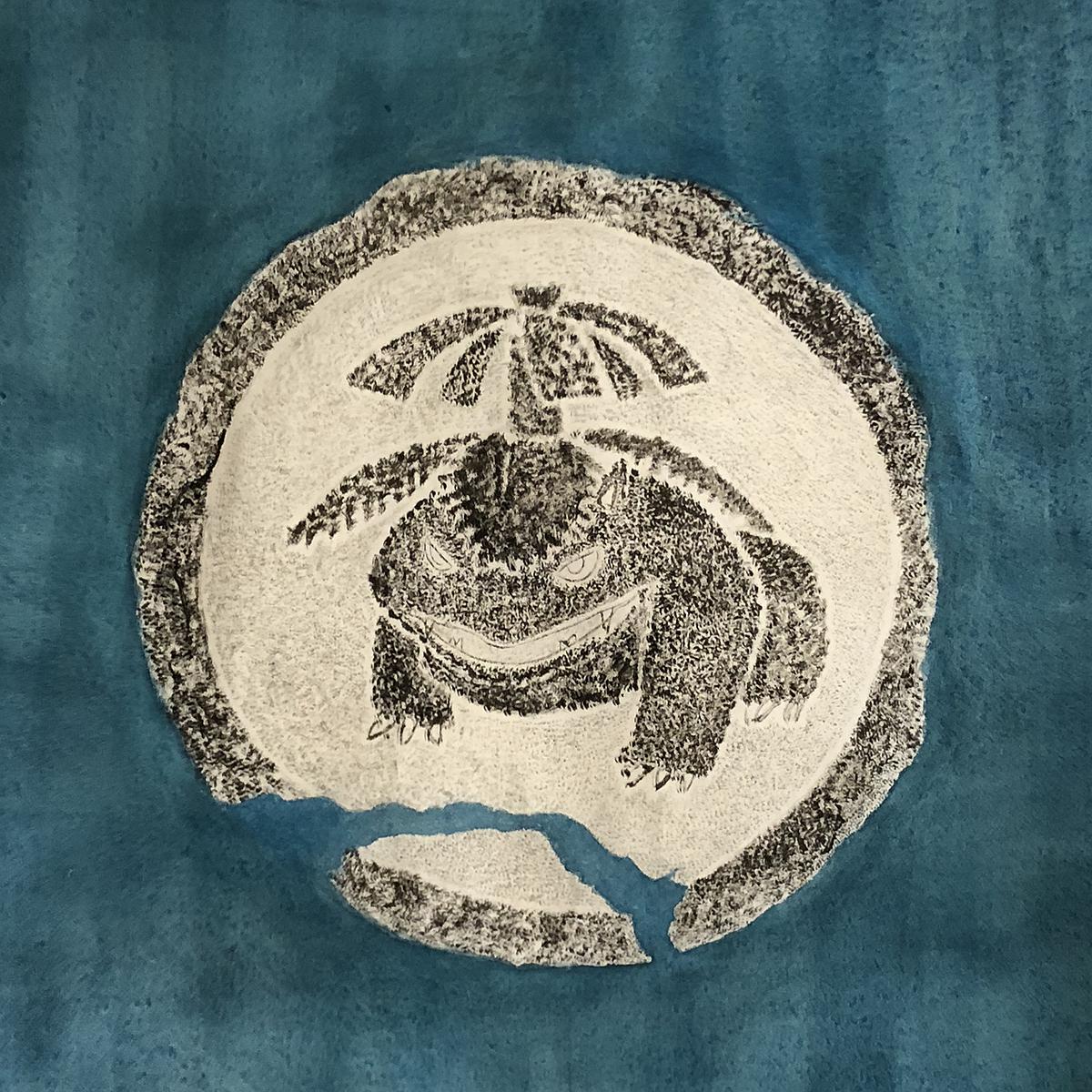
Before the discovery of Mawangdui's silk paintings, the Han dynasty’s paintings were almost based on picture stone and brick reliefs, and thus Han picture stones serve as the optimal reference source for studying aesthetics theories and life customs in the Han dynasty. This paper looks at the theme, expression, and production process of Han picture stone, and draws from them the source of creating paintings.
Chapter 2 mainly presents the author's research on stone engravings. As the themes of picture stone are wide-ranging, the author roughly divides them into four categories: (1) social production and life related to the tomb owners; (2) stories about loyalty, filial piety, chastity, and righteousness; (3) mythologies; (4) dragon and phoenix totems. The presentation techniques fall into three parts: (1) production process; (2) carving techniques; (3) composition.
Chapter 3 concerns the analysis of modern famous works, focusing on the copy art such as seal carving, printmaking, and pop art, which are similar to picture stones in rubbing techniques, and studying the similarities between the copy art and picture stone.
In Chapter 4, the author brings current events into paintings based on Han picture stones. With popular animation protagonists or game characters as elements, the work is represented by simple images in the composition, such as Han dynasty tile combinations or the appearance of stone engravings, thus creating contemporary art styles. In addition, the author creates works with her own style using the techniques of sealing and rubbing, like pictorial seals, printmaking, and Western pop art.