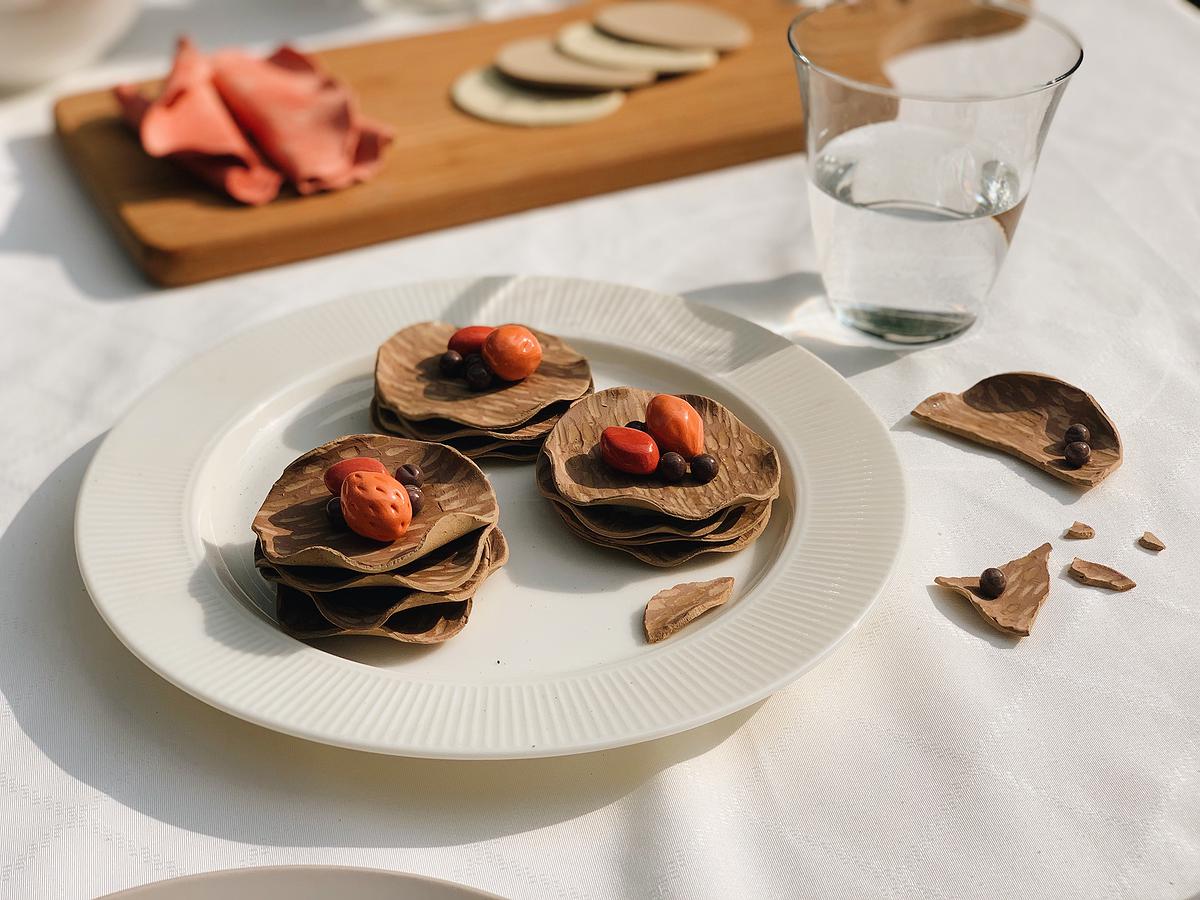
With the daily routine of texting over coffee or watching the news over dinner, "eating" seems like an act of having to do with something else. In a fast-paced society, a multi-functional mind become the basic abilities of modern people. Even when the table is full of mouth-watering delicacies, individual eyes always see the mobile phone screen. Most people tend to reduce the food information they feel to the word "delicious" in an instant without noticing the "five senses" and let it go. (Ishii Kezhi, Jacques Puisais, Sakai Shinji, Tian Yuquan, 2018) What is delicious? How do we define the line between taste good or bad? Miguel Sanchez Romera, a Spanish chef and neurosurgeon, once said that the tongue tastes sour, sweet, bitter and spicy, but there is no "delicious" message from the taste buds to the brain. In other words, there is no standard answer to delicious taste, and it is all judged by personal feelings. However, it is not only taste and smell that feels delicious. "Eating" contains a series of multi-sensory experiences, such as the color seen by the eyes, the aroma smelled by the nose, the freshness tasted on the tip of the tongue, the weight of the tableware in the hands, and the crisp sound heard by the ears, etc. A variety of factors influence the overall dining experience. Only when a person gets down to enjoy the food and try to express the feelings, can he or she truly experience the essence of delicious food through the five senses.
This study will look for the elements of taste from the food we like to eat and the food that looks delicious, and summarize the four main elements: roundness, thickness, fineness and crispness. Based on these four elements, a series of food and utensils are created to present the word "delicious". In order to preserve the imagination space and create the beauty of distance, we do not deliberately imitate the real food, but create a delicious effect by presenting the natural texture of the ceramic creation. The part of the tableware is inspired by ice cream and popping sugar, both of which need to be held and directly touched with the tongue. Therefore, various decorations are matched in the round and full lines to form a tactile contrast. Finally, the work presents delicious food in three different ways through three different situations. Cuisine is decomposed into element areas of basic units, to experience the delicious kitchen area from the cooking process, and finally to sit down and enjoy the delicious table area. The three stages of knowing the ingredients, making the food and enjoying the food are to experience the delicious food step by step, so as to create a level of experience for visiting the exhibition.