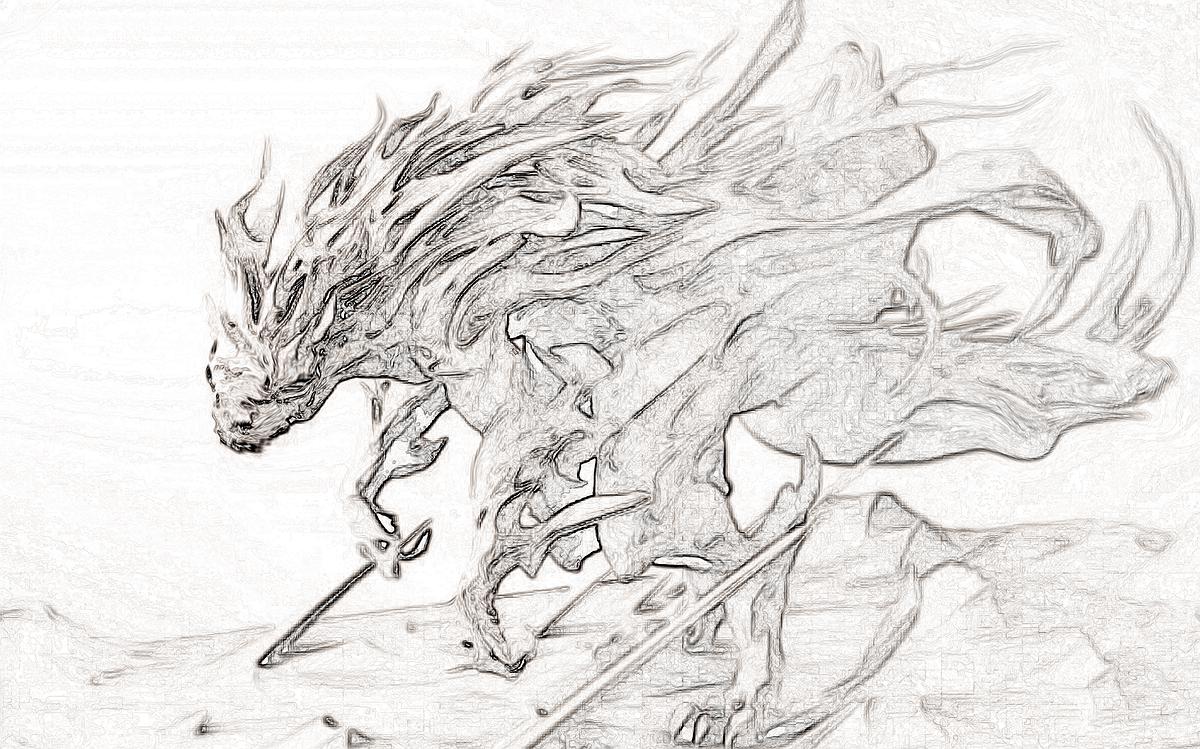
This study draws upon the mythological figures of the Chit (魑), Mei (魅), Wang-Liang (魍魎) the legendary spirits from classical Chinese tales, and reinterprets them as symbolic camouflage patterns within a contemporary military context. Rather than merely recreating visuals, this research delves into the psychological metaphors these entities embody: Chi (魑) as the untamed beast of instinct and violence; Mei (魅) as the seducer shaped by desire and manipulation; Wang-Liang (魍魎) as water bound specters embodying marginal survival and collective struggle. They are monsters, but also reflections of the unseen within us.
Camouflage, in this framework, is not only a tactical device but a cultural strategy—one that conceals, reveals, and reshapes identity under pressure. Just as people adapt masks to survive, camouflage becomes a poetic visual grammar of human fear, cunning, and resilience. Through the hybridization of ghostly imagery and tactical design, this thesis proposes a symbolic camouflage system that bridges ancient spirit lore with modern visual warfare where every pattern is a story of concealment, confrontation, and survival.