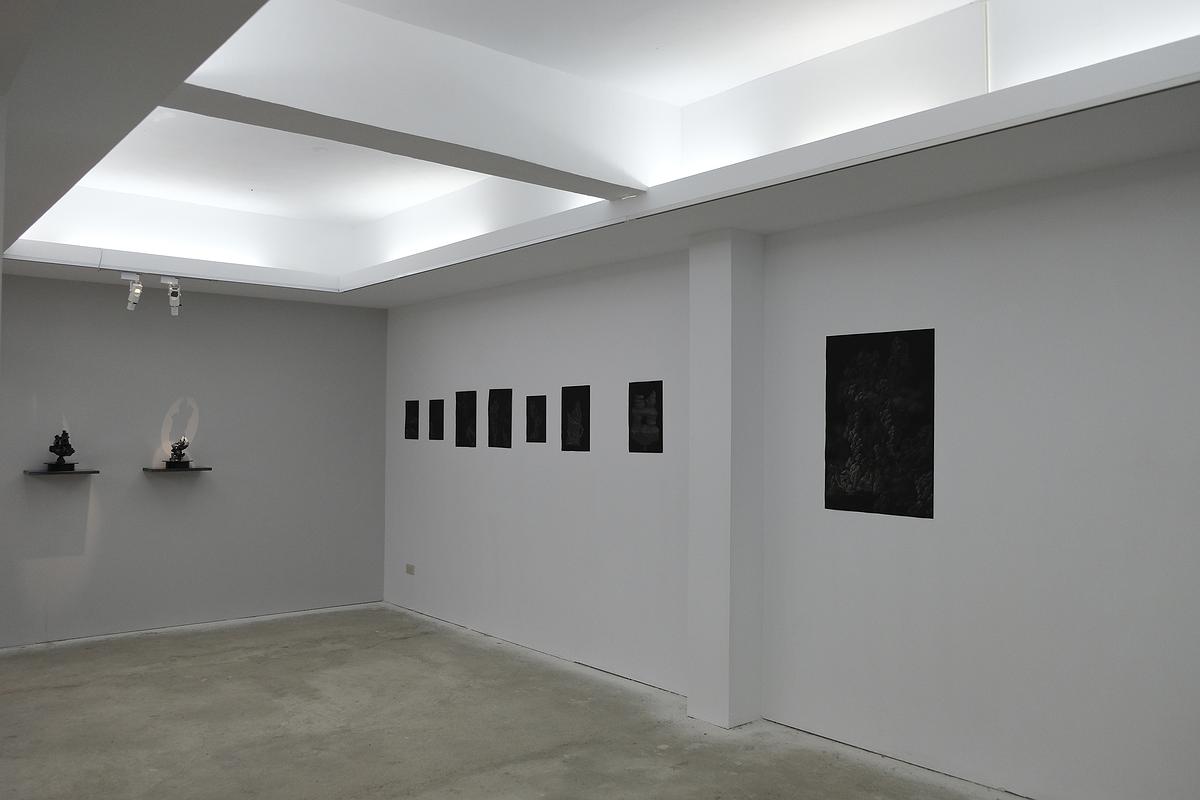
In Truthy Stones, the creator uses the unique shape of stones to create the picture space, and through the concept of truthiness, portrays the mystery of nature. These natural landscapes can be associated with civilization, a period of history, or even an unreachable alien planet. By graphic paintings, the creator attempts to make the viewers get the impression of truthiness in the works. Truthiness is a term coined by American television comedian Stephen Colbert, first used in Colbert's debut episode of The Colbert Report on October 17, 2005. It features a description that "feels like truth." In comparison with truth, the term truthiness has nothing to do with facts and logic. The only measurement of truthiness is based on one's intuition, which means that perception of things can be true when one feels like it is true, and relatively speaking, such a perception can be true or false in fact.
The first chapter of this thesis is the creation plan with motivation and purpose. In the second chapter, the author extends the context of Chinese and Western aesthetics and art history with the references to the aesthetics of Chinese gardens and Zen as well as Japanese gardens. Touching upon the collections of strange stones around the world and from the contemporary and contemporary artists, the author explores the style of the creation, its picture space, and the blank black background with the aesthetics of Scholar’s Stones and Japanese rock gardens. The third chapter and the fourth chapter deal with the process of the author’s creation and its interpretation, focusing on the creative direction as well as the context. The two chapters also examine the connection between the theoretical foundation and the works from the shape of the depiction and the use of space. The fifth chapter is to conclude the advancement of the overall series on creation.
Nowadays, science and technology are moving at a faster pace than ever with large amounts of information. The real and virtual perceptions become interlaced. The author hopes to wander between reality and virtuality through creation.