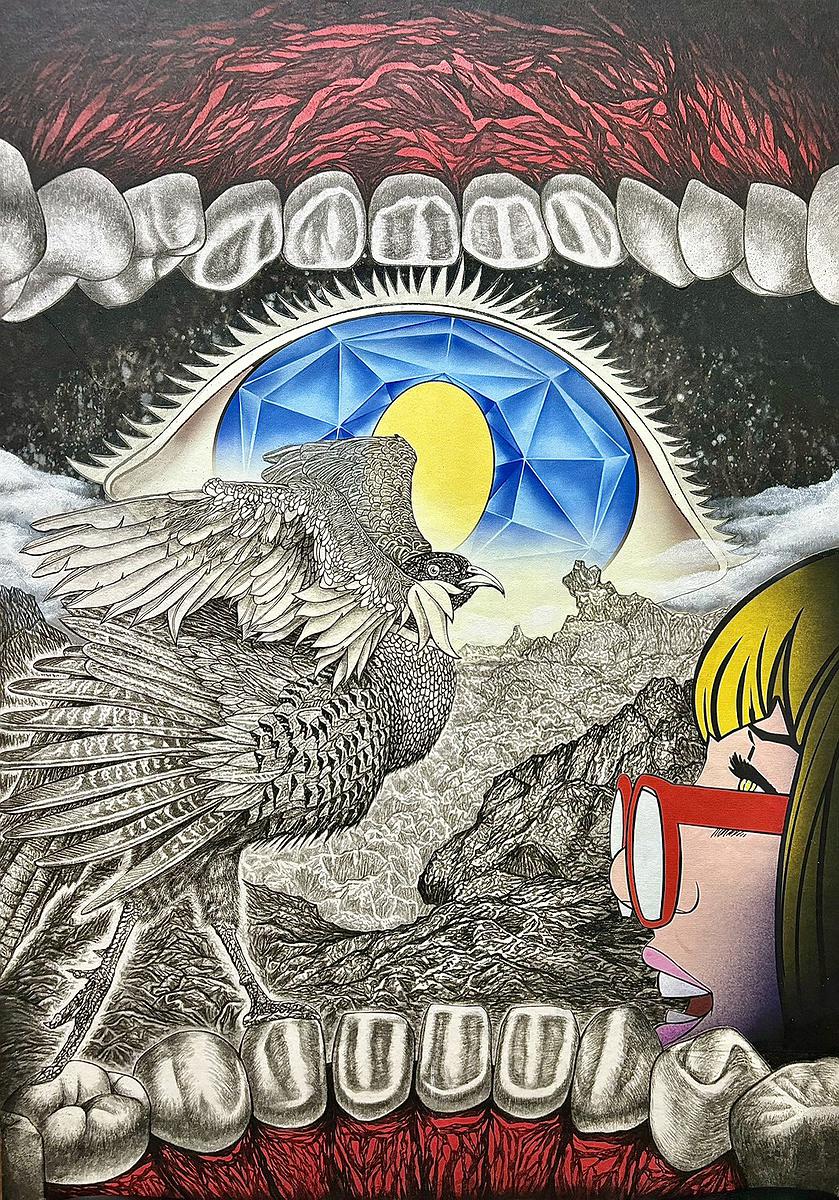
The concept of “Miraculous animals and plants in Shanjing” aims to present ancient supernatural beings and shamanistic thought patterns, which lie dormant in the collective unconscious of humanity, through the medium of two-dimensional painting. By integrating these elements into imagery and narratives that modern audiences can comprehend, the project seeks to bring these mystical visions to light.This research-based creative study focuses on exploring the supernatural beings depicted in the ancient Chinese classic, Shan Hai Jing, using them as the primary subjects of artistic representation. The study delves into the fundamental chapters of Shan Hai Jing, the different types of shamanistic practices described within, and the functions of various mythical creatures. Through an anthropological lens, it examines how these thought patterns have influenced modern life via the collective unconscious. Additionally, the research investigates the visual compositions of Shan Jing illustrations from the Ming and Qing dynasties, analyzing their impact on contemporary artistic representations of Shan Hai Jing. Finally, the study explores surrealism, a movement that emphasizes the depiction of the subconscious mind, and applies commonly used surrealist visual techniques to the artistic creations that follow.
The thesis is divided into five chapters. Chapter One outlines the research motivation, objectives, content, and methodology, establishing the foundation and direction of the study. Chapter Two investigates the textual content of Shan Hai Jing, as well as the visual representation of supernatural beings in both ancient and modern times. It further explores the concept of shamanism through anthropology and the collective unconscious, examining its influence on contemporary society. Additionally, this chapter studies surrealist visual techniques and artistic expressions as a theoretical foundation for creative research. Chapter Three builds upon this theoretical groundwork to develop the author’s personal creative philosophy, artistic aspirations, and technical explorations. It also describes the different stages of the author’s painting process and the visual discoveries made through various techniques. Chapter Four analyzes the twenty works produced in this study, focusing on three aspects: imagery, creative concepts, and applied techniques. Chapter Five serves as a reflective conclusion, summarizing the research findings and contemplating future creative directions.