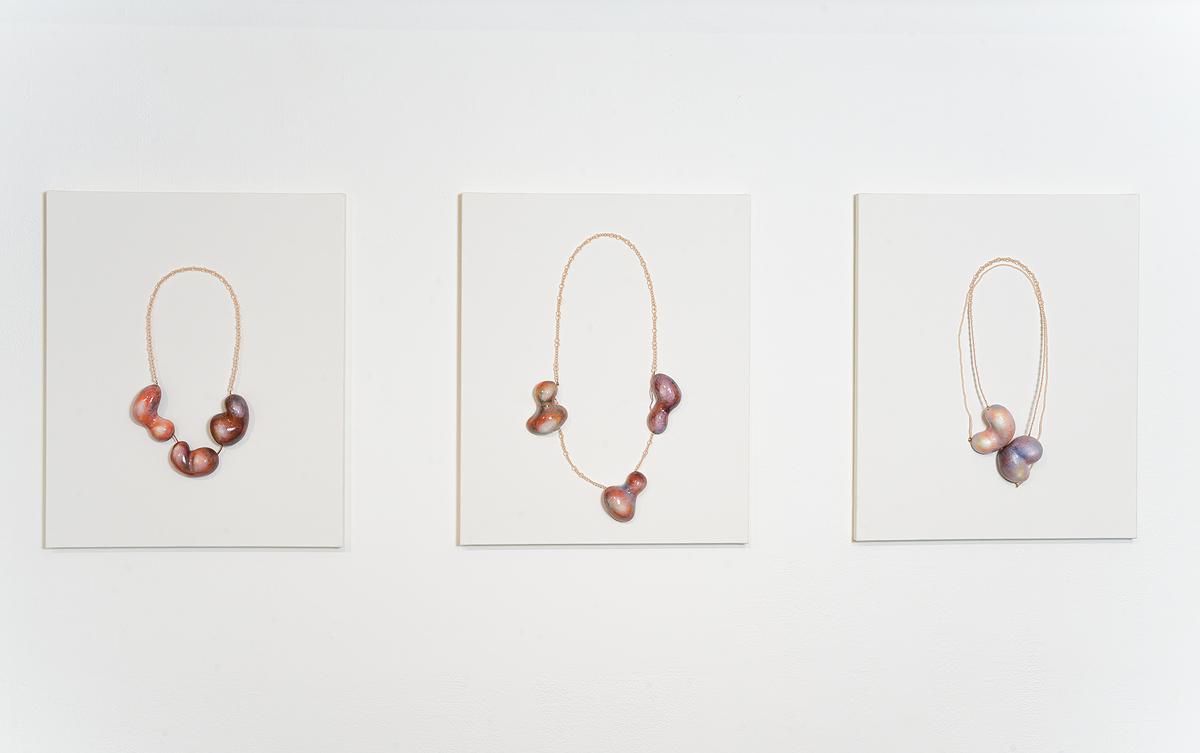
The scope of this research spans from 2022 to 2025. Titled Wearing the Skin, this written report begins with lived bodily experiences of skin allergies, examining the formation of personal aesthetics and the relationship between bodily appearances and internal sensations. By closely observing epidermal changes such as wounds, scabs, and processes of repair, the study analyzes how physical scars and psychological experiences jointly shape self-perception. This research understands cunfa (textural strokes) as a method for generating surface texture and a way of perceiving the surface, and adopts it as a creative methodology. The creative process is initiated through material experimentation, departing from conventional approaches in metal craft. Through collecting, analyzing, and combining heterogeneous materials, material surfaces are allowed to respond to traces left by time, abrasion, and bodily interaction. Natural materials are regarded as metaphors for the epidermis; through acts of sealing and material translation, symbolic meanings gradually emerge under the influence of time and the hand.
The thesis is structured into three chapters. Chapter One, Cun: Skin, Body, and Jewelry, draws parallels between the concept of cun in traditional ink painting and the textures of skin, redefining the relationship between contemporary jewelry and the body. Chapter Two, The Metaphor of Allergy, explores the tension between the inner and outer layers of the epidermis in allergic states through techniques such as pressing, wet–dry mixed enameling, and the body molding. Chapter Three, The Metonymy of the Epidermis, applies materials including wax, tree bark, and aluminum to expand jewelry into spatial dimensions, investigating the relationships among body, material, and site.