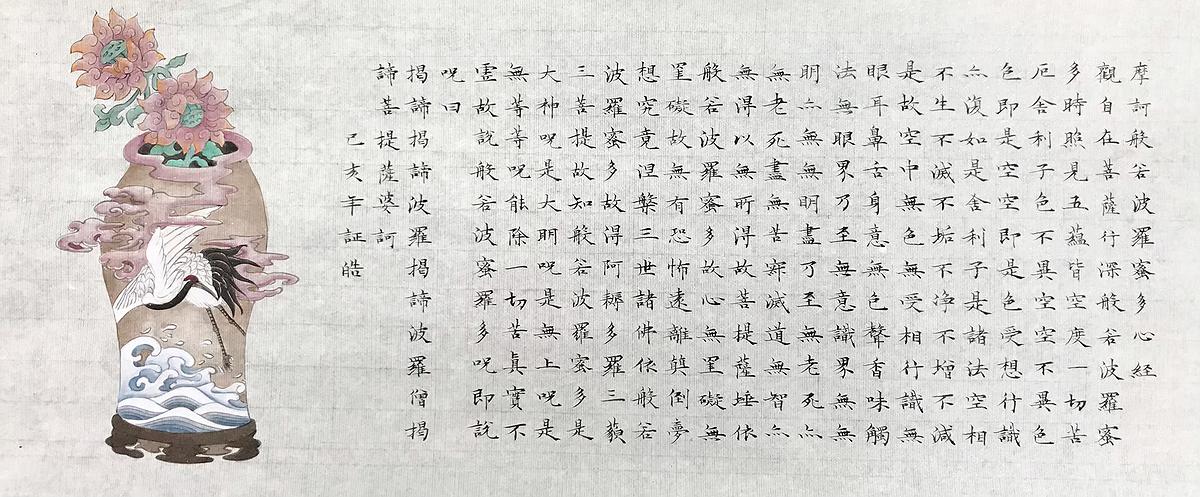
This creative thesis is based on the painting creation in the four years from 2017 to 2020 as the starting point, to discuss the combination of Chinese brush painting and multicultural symbols and create new forms of expression. The writer uses the term "cultural juxtaposing" to create. "Juxtaposing" is to deconstruct the image elements of the predecessors and then transform them into a new form, and transferred it into own creation in order to achieve the field of space juxtaposing.
In the second chapter "Cultural Alienation Aesthetics". The author first selects flower-and-bird painting of the Song Dynasty to discuss "The Aesthetics of Chinese Painting". By Analyzing the form of emperor Song Huizong's flower-and-bird painting to understand the form of inscription by the Song Dynasty and apply it to creation. Choose the subject of the painting you need, and combine poems in a way of affection to let the viewer know the value and meaning behind the work through the poems on the work. The "Discussion on Juxtaposing" in this thesis will clarify the term "juxtaposing" and discuss the "core spirit of Juxtaposing". Advocating "juxtaposing", that is, "cultural juxtaposition" to take the advantages of each cultural symbol and place each other in the painting. Although "Juxtaposing" and grafting are the same in their use, they are essentially different. Therefore, this theory will analyze the differences between the two through works.
In the third chapter, the author uses Eastern aesthetics for creative practice. In terms of creation, the author uses "juxtaposing" thinking as the expression of choice and collocation of forms. It will analyze and discuss chapters such as "Creative Methods and Formal Expression" and "Exploration of Painting Techniques and Experiments of Painting Materials". In the chapter fourth "Analysis of Creation Works", the author elaborates on the creation practice and connotation analysis of the "Series of Tile" and "Series of Poetry" one by one. In the creation method and form expression of the "Series of Tile", the author uses Ancient Taiwan tiles as the main creative elements and combines Chinese flower-and-bird paintings and Ukiyo-e in the creation. The selection of painting materials has gradually changed from meticulous painting to glue painting, which means to obtain a saturated visual experience and form development. And the use of colors is more diversified; the sense of multi-level is also more abundant. The "Poetry Series" uses the combination of poetry and painting to create. Both series have the combination of Chinese painting aesthetics and multiculturalism, and both are verified by experiment and creation, in order to express the ideas and creations in mind.
Overview, the theme selection of this creative thesis is mainly based on different oriental cultural elements such as Taiwanese folk art, Chinese flower-and-bird painting and Japanese Ukiyo-e. Through transforming the symbolic elements required for "alternation" into the form needed by itself, apply Chinese painting aesthetics to creation, combine these symbols with the author's spiritual thoughts, and attempt to open new forms and creative thinking.