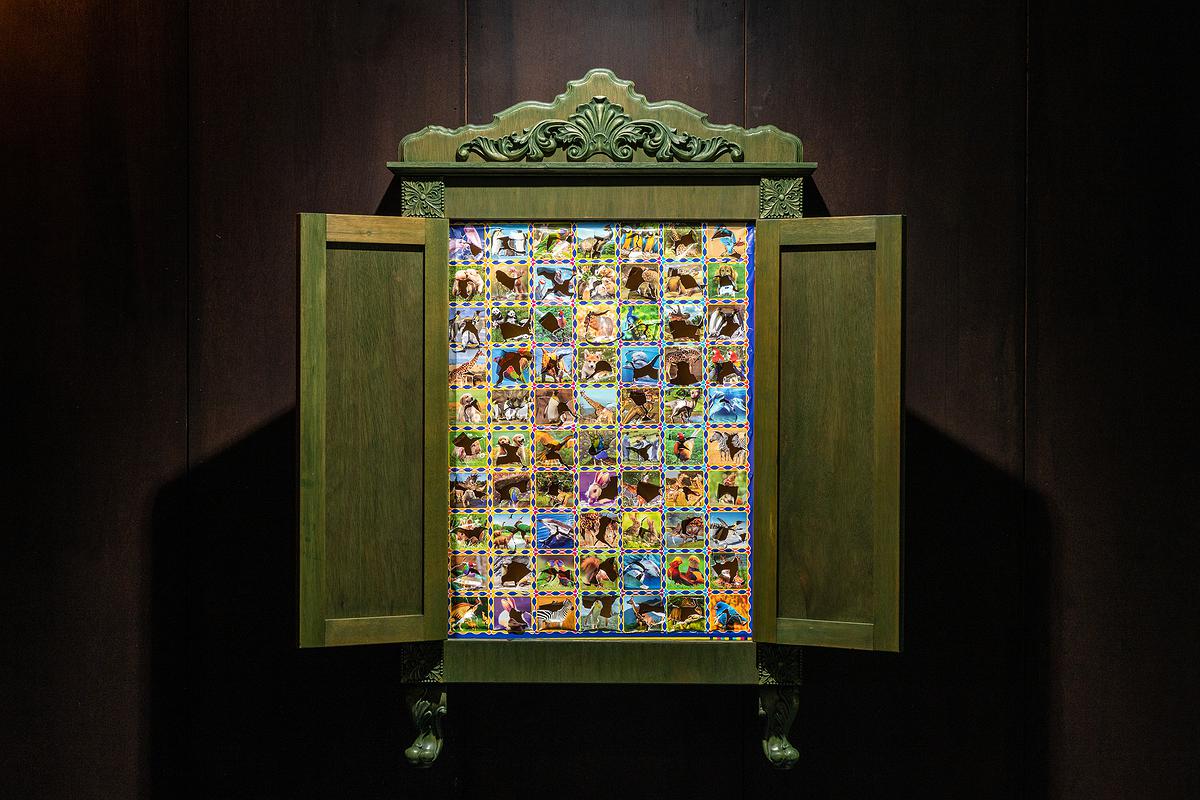
This thesis aims to examine my artistic works from 2020 to 2024. The development of these works gradually shifted from a focus on nature to a focus on "animals." I collected various objects and pictures of animal imagery, attempting to delineate their contours and, through my creations, construct a context for viewing these representations. This process allows for a rethinking of how we perceive, imagine, and create animals.
The thesis is structured into five chapters. It begins with an introduction that discusses my personal experiences of interacting with the natural world, noting that my fascination with animals stems not only from biological instincts but also from cultural constructs under societal frameworks—the "imagined animals." Referencing John Berger's essay "Why Look at Animals?" which analyzes the marginalization of animals, the representation of animals gradually becomes distinct from the "real." They are imagined, constructed, and become independent objects. Chapter One starts with the invention of the zoo, tracing how humans have created spaces for displaying animals within the process of modernization. In these contexts of gathering nature and clustering animals, what do we actually see? Chapter Two explores the human desire to collect animals, which began with the development of cabinets of curiosities in sixteenth-century Europe. This desire has only grown, and in contemporary cabinets of curiosities, the representation of animals has become increasingly "cute" and diverse. The perception of "cuteness" varies, and the mechanisms behind it deeply influence how humans understand animals from childhood. Chapter Three uses a metaphor of absence to signify the disappearance and death of "real animals," highlighting their diminishing presence in daily life. In their place, "imagined animals" proliferate rapidly, eventually presenting themselves through various media, reproducing themselves, and gradually replacing the real.