Since ancient times, there has not been any final conclusion for the imitation of art. Expression and appeals from different generations have generated different interpretations, and thus led to diverse and multidirectional development of art. The expression of art is not the same as the transmission of words. The words can only transmit the intangible thoughts, but the expression of art can do more. Art is able to transform our ideas and feelings into symbols because our ideas and feelings drift between concepts and intuition.
This article is based on Gestalt psychology from Anheim. Gestalt psychology is also used as a reference to the art works to probe into the field experienced by the visual experience from the images. The artwork is the link between the real reality observed by the author and the reality presented by the artwork. Through the author’s thoughts and construction as well as the journey of creation, the presentations of the artworks are all realization gained in daily life. Analyzing through reading the history of art, commenting on texts, and social experiences, the meaning of creation is originated from the analysis of the self-thinking process and is then transformed into personal vocabulary.
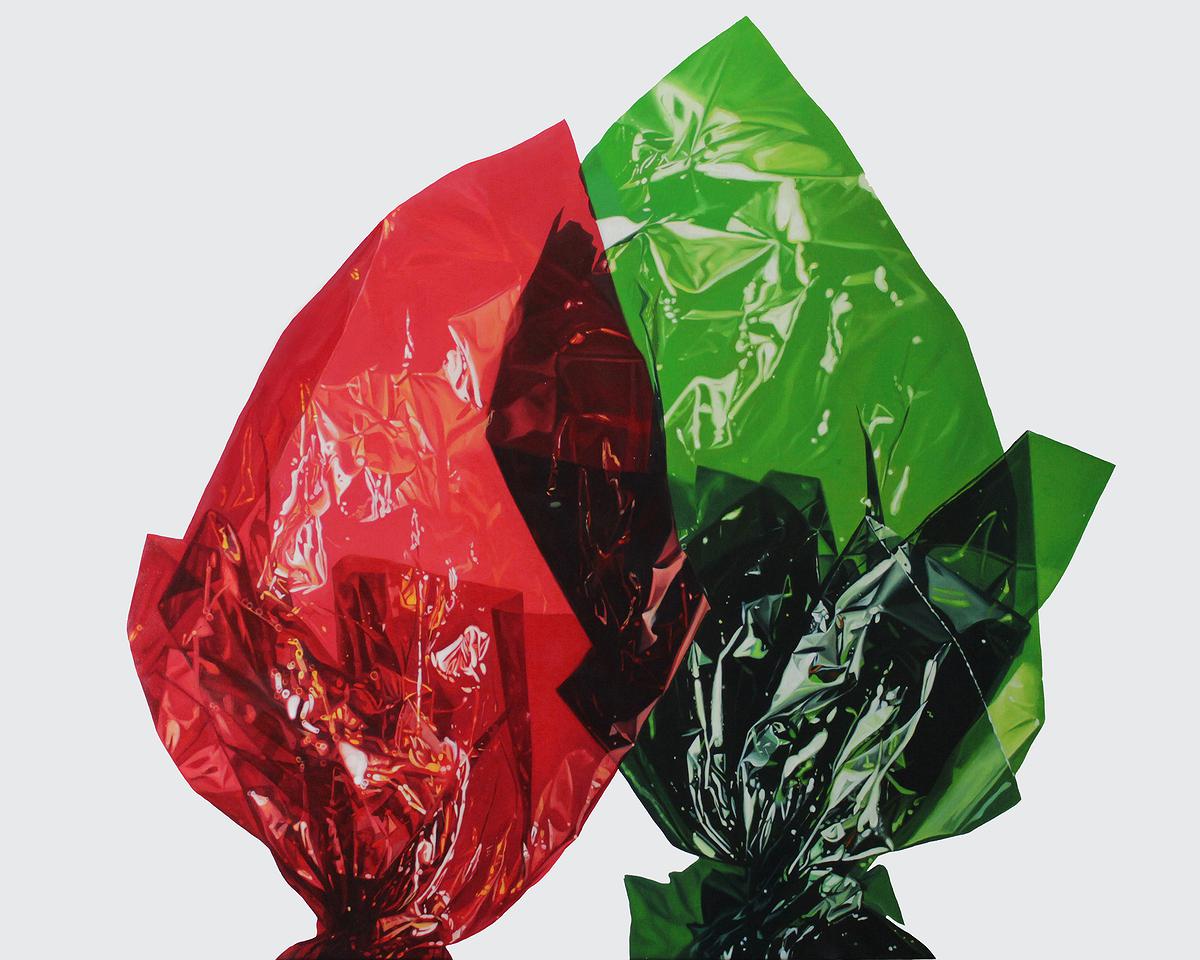
The author interprets her own definition of imitation through reading texts. The original idea of the artworks comes from a large number of plastic objects in daily life, which brings out the issue of environmental protection in today’s society. Added with the flexibility of cellophane, which is a link between the image of artwork and the concept of creation, the author translates her ideas into the artworks. Through analyzing other artists’ approaches, the author talks about her motivation of using the techniques of realism. The presentation of shapes and movements in the artworks is a way to depict imitation. After exploring the art-related theories, the author clarifies her context of the artwork, translates her ideas into her artworks, and interpret her definition of imitation.