It is still a matter of debate whether the consequences of globalisation are threatening or beneficial to the race or the tribe. Taiwanese society has undergone a massive transformation, but it is now facing several issues, for instance, cross-cultural phenomena and the tension between national and ethnic boundaries. Self-recognition within an ethnic group is influenced a great deal by an indistinguishable ethnic boundary, and the gap between cultural boundaries and social boundaries has deepened over time. Interweaving cultures have resulted in the overlapping of different ethnic groups’ images. For example, the presence of new Taiwanese immigrants, Hakka mainlanders, and Hoklo, Cina, and Totok ethnic groups demonstrates how cultural diversity displays features of cultural hybridity and
multi-acculturation. The new form of the society can be viewed as the effect of the change from being an industrial society to a post-industrial society.
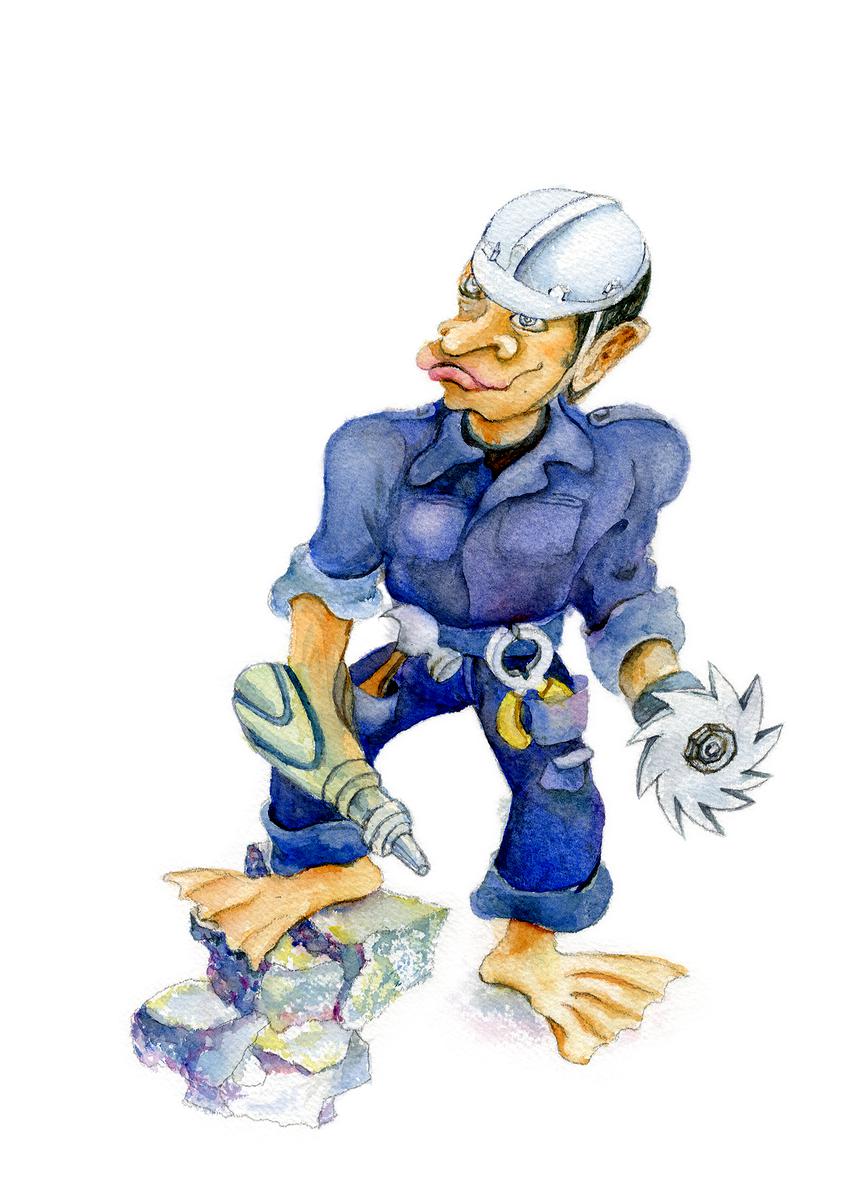
This research is divided into two parts, comprising secondary research and mimicry figure design. The secondary research mainly targets the perception of the contemporary theory of hybrid creatures by the following contemporary artist representatives: Patricia Piccinini, Kawaguchi Yoichiro, AES+F, Nicholas Di Genova, Daniel Lee, and Huang, Zan Lu. In following the theory through from analysing the results collected from the secondary research, the design outcome of the mimicry design methodology on character design is applied to several deep-sea species. It amounts to a recapturing of the ” The Solitaire Mystery” by Jostein Gaarder (b. 1952) from the perspective of contemporary art. It follows the same scenario of a diaspora of races and families and combines the story of metafiction, the ecological behaviour of deep-sea species, and the discretionary artistic deduction of character design to explore the appearance of deep-sea species with mimicry methodology. Moreover, it explores the lurking from the use of hybrid genre forms and presents a possible future scenario encompassing the alienation of man, the environment, ecology, and the genetic variation of creatures.
Using the mimicry methodology of character design as a guiding influence, this paper will argue that the contemporary theory of hybrid creation developed by contemporary art theory researchers can provide a framework for vision-related pragmatics concepts as well as allowing creativity and a method of contributing to a particular figure’s character traits and motion rhythm. Intercultural and creativity considerations were identified as philosophical reflections on the fiction about ideological circuits in a relationship, and exaggerated gestures, a rhythm line, and weight distribution were found to be the basic elements of character design in the emerging hybrids of fictional character' schemata.