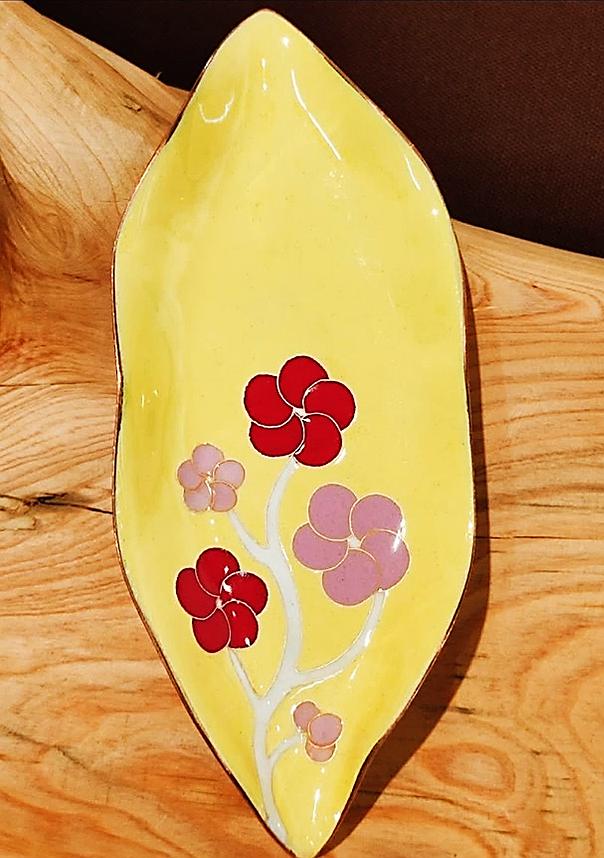
Early Taiwanese tile patterns combined traditional Taiwanese folklore with foreign cultures. At that time, people used tile patterns to convey auspicious meanings, but now these tiles have almost disappeared. Japanese cloisonné is a metal craft that originated from Chinese cloisonné. This technique uses silver wire to wrap the pattern, fill it with glaze, and then burn it at high temperature to form a colorful, smooth surface with a glassy texture. Although these two techniques have different cultural backgrounds, they can both express rich auspicious meanings through patterns and colors. The purpose of this study is to combine the auspicious traditional patterns of Taiwanese and Japanese tile shapes, use the Japanese wired cloisonné technique to create works, and explore the cultural integration and possibilities of the two.
The theme of the creation is aimed at four groups: elders, friends, children, and lovers. It aims to convey wishes at different stages of life, and express emotional blessings for family, friendship, and love according to the auspicious meanings represented by different pattern combinations. The research methods are literature analysis and content analysis. Through literature inquiries, the origin and history of Taiwanese and Japanese flower tiles, as well as the art and culture of Japanese cloisonné, the auspicious meanings of Taiwanese flowers and traditional Japanese flower tile patterns are analyzed, and the production methods of wired cloisonné are studied. After visiting the Taiwan Flower Tile Museum and Hiromi Iwata's metalwork art exhibition, we have a deep understanding of the modern application and innovation of flower tile patterns and cloisonné, and further explore the fusion of the two to create wired cloisonné works with traditional aesthetics and modern design.
This study combines the traditional shapes and patterns of Taiwanese and Japanese flower tiles to create wired cloisonné works with auspicious meanings. The study found that the two have many similarities in auspicious meanings, and through modern wired cloisonné techniques, it not only retains the exquisite texture of cloisonné craftsmanship, but also demonstrates the innovative potential of the fusion of traditional cultures of the two countries. Future research can expand the source of data, explore the diversification of techniques and richer cultural themes, and promote the exchange and innovative development of traditional crafts of the two countries.
Keywords: Traditional patterns of Taiwanese and Japanese tiles, Japanese wired cloisonné, Chinese cloisonné, enamel