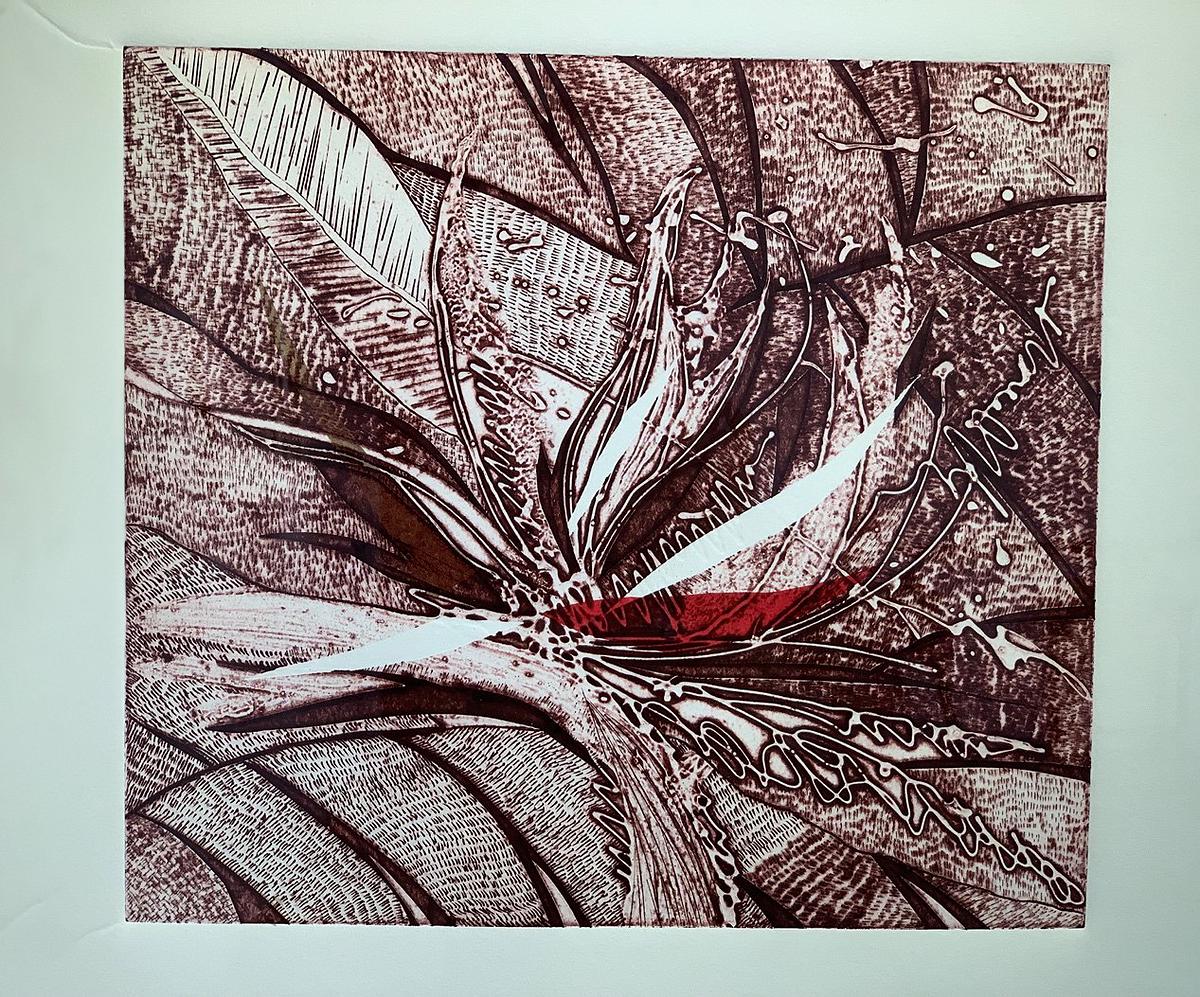
Over the course of five chapters, the creative discourse “Imagery of Flowers” explains and analyzes the author’s perspective during each stage of artistic creation. The area of research includes printmaking and floral design from 2016 to now. It expounds analytical artworks and records the concept and process of creation.
The general appearance of pictures shows the connection between flowers and old items; photographed, video-recorded and painted by the author. The author searched for the most memorable objects around his house and traces back to the enlightenment of flowers inspired by migrant workers from Southeast Asia, setting them off against each other with the aim of accurately portraying the ambience of the pictures.
In this art-centric thesis, the first chapter is the introduction, which describes the author’s childhood first contact with flowers and the different visual perception by migrant workers from Southeast Asia, in order to pinpoint the purpose of this artistic research. The second chapter is the theoretical foundation, which proposes related domestic and foreign books to investigate and illustrate the association of artworks. Moreover, it explains the author’s concept of transmission of flowers and the theory of floral design from simply appreciating and observing, to learning about the floral design. By referring to these articles and books, the author can analyze his feelings which are reflective of his mental state. The third chapter is the creative analysis. Through analyzing the content and the technique of the artworks, people can understand the concept of this thesis on a deeper level. In addition, by incorporating techniques of photography into the printmaking process, utilizing lines to create different atmospheres and choosing the appropriate printmaking materials, the artworks can deepen the association perception of the viewers. The fourth chapter analyzes the creative pieces themselves, while the fifth chapter is the conclusion. By analyzing theories and experiences in creative pieces, this thesis proposes comprehensive retrospect and reviewing, and suggests the possibility of future artwork development.