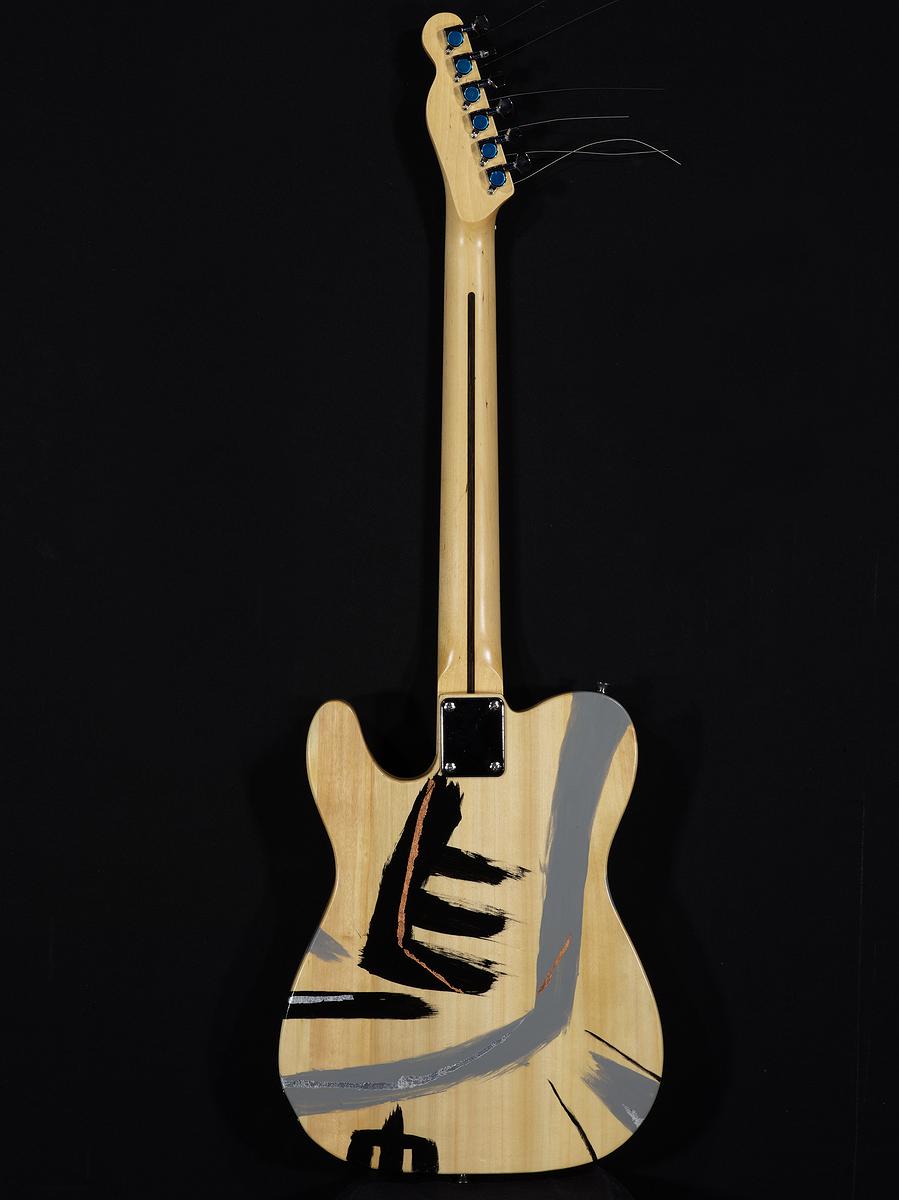
In the process of its development, calligraphy had mainly focused on the study of operating brush and ink techniques. During the late Ming and early Qing dynasties, personal expressionism became popular in calligraphy, the artistic conception formed between the lines and characters were valued by the calligraphers. The variations in blank-leaving also began to show different styles due to the more exaggerated making space between stroke lines. However, the white space produced along with ink marks still belonged to an unconscious form of blank space. In artworks, though the proportion of white space was not less than the lines of ink marks, it had often been neglected during the practicing process of calligraphy in the past. Even in early few discussions on calligraphy, the concept of blank space was mentioned, yet its content was still related to the coordination with ink marks, and the negative blank-leaving wasn’t treated as intentional placement.
After the 19th century, the presenting forms of calligraphy were influenced by Western painting, and blank-leaving began to be valued by calligraphers. White or space was gradually becoming one of the expressive ways in layout. Combined with Eastern Zen and Taoist philosophies, it was practiced in both Eastern and Western creative works, creating lively variations in layout and providing more imaginative space.
This study quotes the four characters “虛室生白” from the text 《Zhuangzi․ Human World》 as its theme, for attempting to explore alternative possibilities in calligraphic creation via the concept of “white space”. It derives the following four concepts for calligraphic creation:
1. Passive blank-leaving:Following the literal actions “virtual space” and resulting in”blank-leaving”, it completes the creation by using classical or traditional forms as the generation process of blank-leaving in traditional calligraphy.
2. Active placement of white space:Based on the outcome of “blank-leaving”, drew up the structural development of ”virtual space” while adhering to the principle of balancing black and white, thus completing the lay and composition.
3. Mutual generation of emptiness and reality:Virtual “space” generating “blank” is the concept of emptiness (虛) and reality (實), it combines Western techniques with traditional calligraphic experiences, seeking to create a mutual verification of emptiness and reality.
4. Subject-object relationship of emptiness and reality:In the context of “虛室生白”, “white” can be interpreted as a form of distance or a kind of space. Through the concept, it can be extended to the realm of spiritual blank space, interpersonal distance, and further applied to the relationship between emptiness and reality in calligraphic phenomena. Therefore, the creative ideas can be extended.
By exploring the concept of “虛室生白” , the author hopes to find a glimmer of inspiration in calligraphic creation starting from “white” and looks forward to a brighter future for the art of calligraphy.