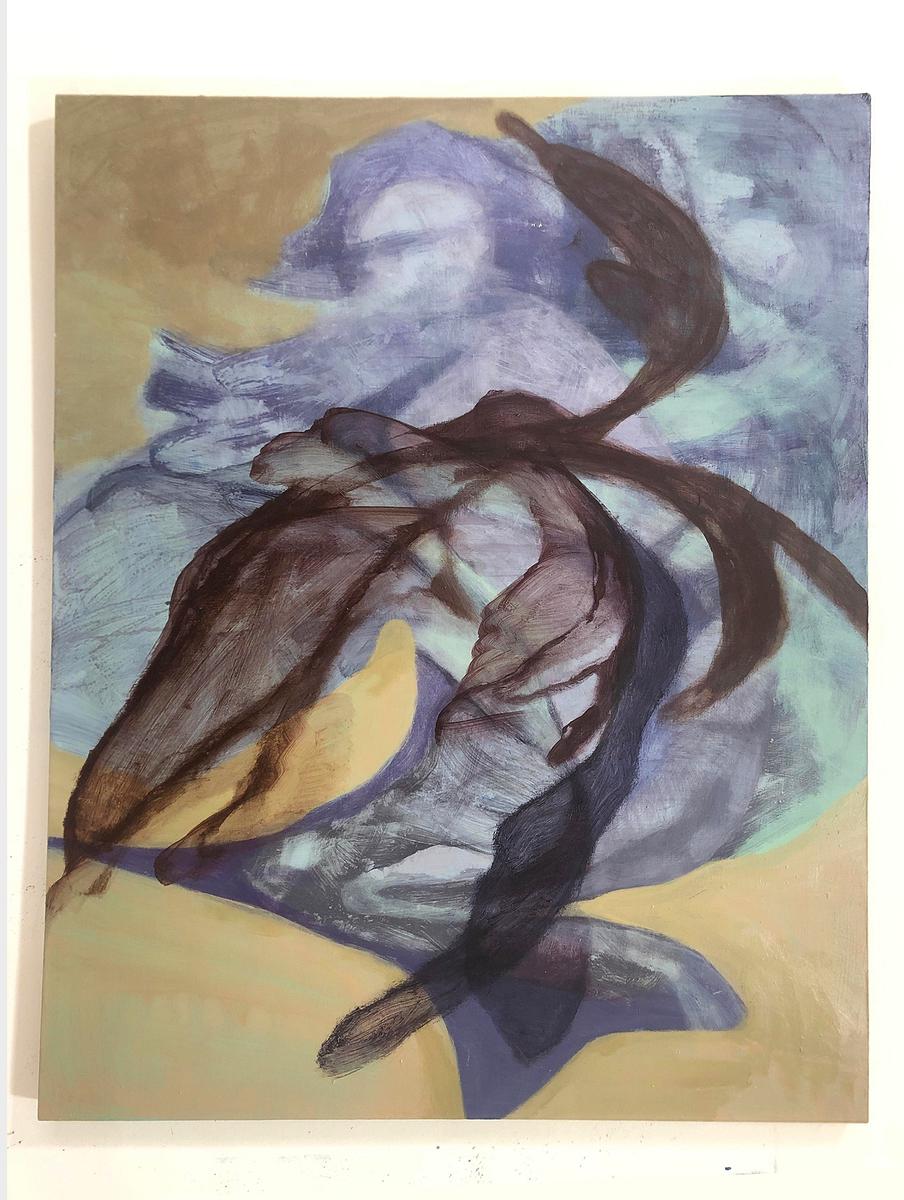
The extraordinary yet indefinable feelings from life experiences enrich our mind's imagination of the world. In life's journey, people are often in a dreamy state, unable to see the world around them clearly, and submit the power of interpretation to the world on which we seldom reflect. Our mind seems to lack the desire to seek for the unknown. Based on the author's life experience, the open imagination of the external world shuttles through the blurred zone between personal consciousness and the real world, serving as a question about the age of "Ambiguity."
Recognizing art as the flow of life and immersing ourselves in it, the images of life evolve with the passage of time. Life is a continuous state; there are always various conflicts, yet harmony/mixture between ideal and reality, spirit and matter, soul, and body. This author observes her creative context from the perspective of 'Écriture feminine' and analyses her styles in different periods of her life from the standpoint of "Deformation/Transformation," which also explores her own identity—trying to pursue a rich and profound attitude, listening to the "real" voice of the body, and trying to discover the large sum of energy surge in our hearts.
" Perception, Expansion of the Subconscious" is the title of this thesis; through reflecting upon the surroundings of the author's life, she tries to seek the truth that she believes in, try to grasp the logic and contexts behind her art creations, regarding art as a form of life. This thesis is divided into five chapters. The first chapter, "Introduction," describes the motivation and origin of her art creations. The second chapter, "Discussion of the Theoretical Basis, " with "tracing the origins" as the starting point, revolves around the three principals "body," "mind," and "subconsciousness," and uses feminist literature, bodily phenomenology, psychology, to explore the perception of the body and personal consciousness, trying to rediscover the self. The third chapter, "Creative Concept and Practice," discusses how to visualize the perception of the human body and the translation of body and mind in the painting process. The fourth chapter, "Analysis of Works," attempts to analyze the author's series of creations in different periods from the perspective of the microcosm, using images and "Deformation/Transformation" as the analysis to study her creative techniques and significance. The fifth chapter, "Conclusion," summarizes the research results and plans for future artwork creations