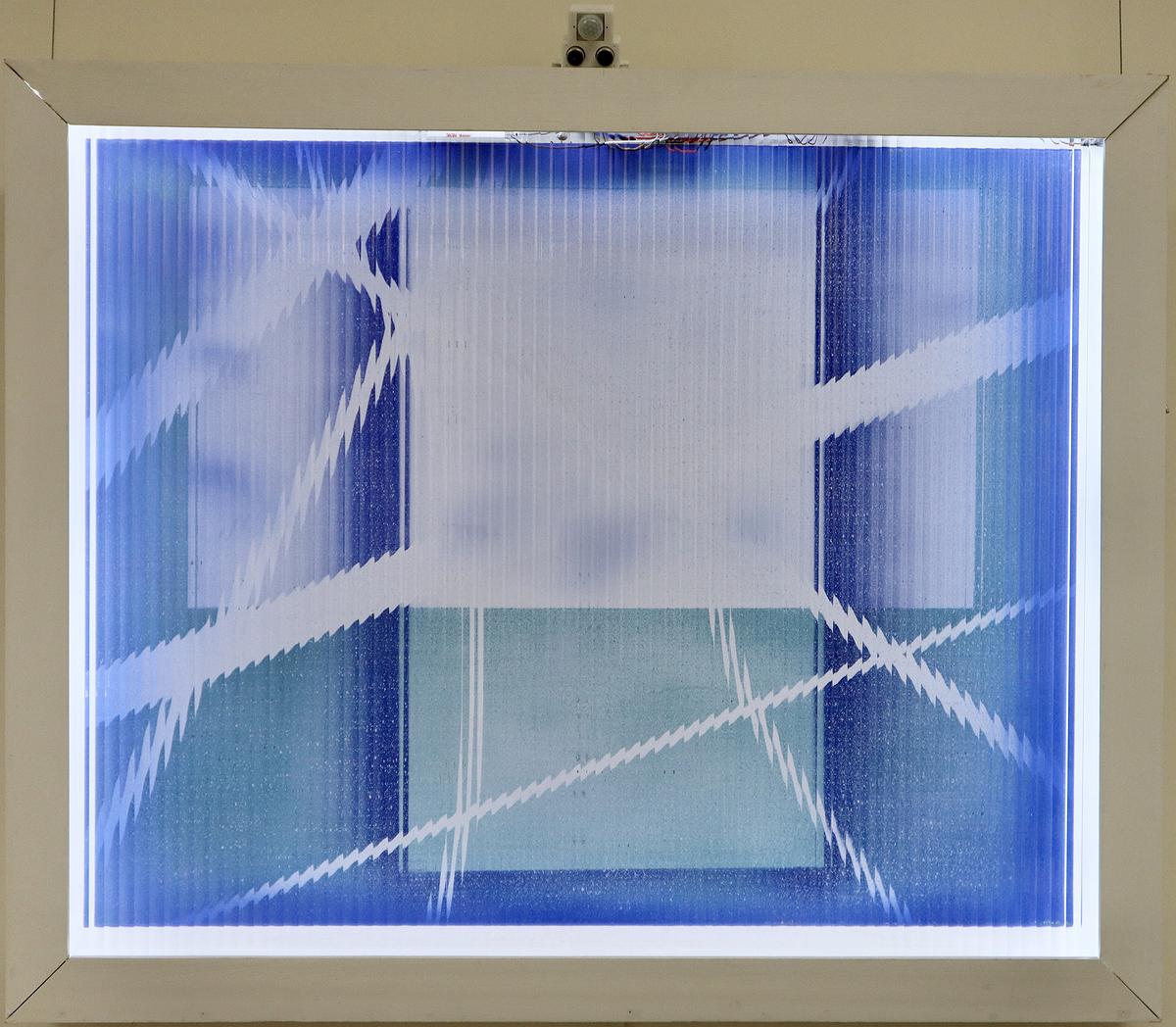
This research centers on the concept of Transforming the Environment with Our Mind (境隨心轉), exploring how an artist’s internal state of mind transforms into visual forms through the process of artistic creation. For the author, art is not merely a depiction of imagery, but a dialogue with the soul—a quest for a personal rhythm and language between chaos and order. Originating from representational techniques, the author gradually transitioned into abstraction, seeking a more fluid and expressive visual vocabulary to mirror the subtle fluctuations of emotion and thought.
Grounded in the theories of Gestalt psychology—especially the principles of "primacy of the whole" and "visual organization"—this study incorporates the concept of mental imagery to examine how invisible inner visions are summoned, translated, and anchored into artworks. Drawing inspiration from the practices of Gerhard Richter, Lee Chung-Sheng, James Turrell and Dan Flavin, the research investigates how these artists externalize their inner worlds into visually compelling forms.
The creative outcomes span four series: Mental Imagery, Origin of Life, Reflective Objects, and Inner Refractions. These works utilize diverse media—painting, mixed materials, spatial installations—to embody moments of emotional transformation. Rather than representing the visible, they evoke the intangible, inviting viewers into a poetic field of perception.
Ultimately, this research affirms that the “environment” is not a static backdrop, but a mirror shaped by the mind. Artistic creation becomes a testimony to this dynamic interplay between perception, material, and internal emotion—where rational structure meets poetic intuition.