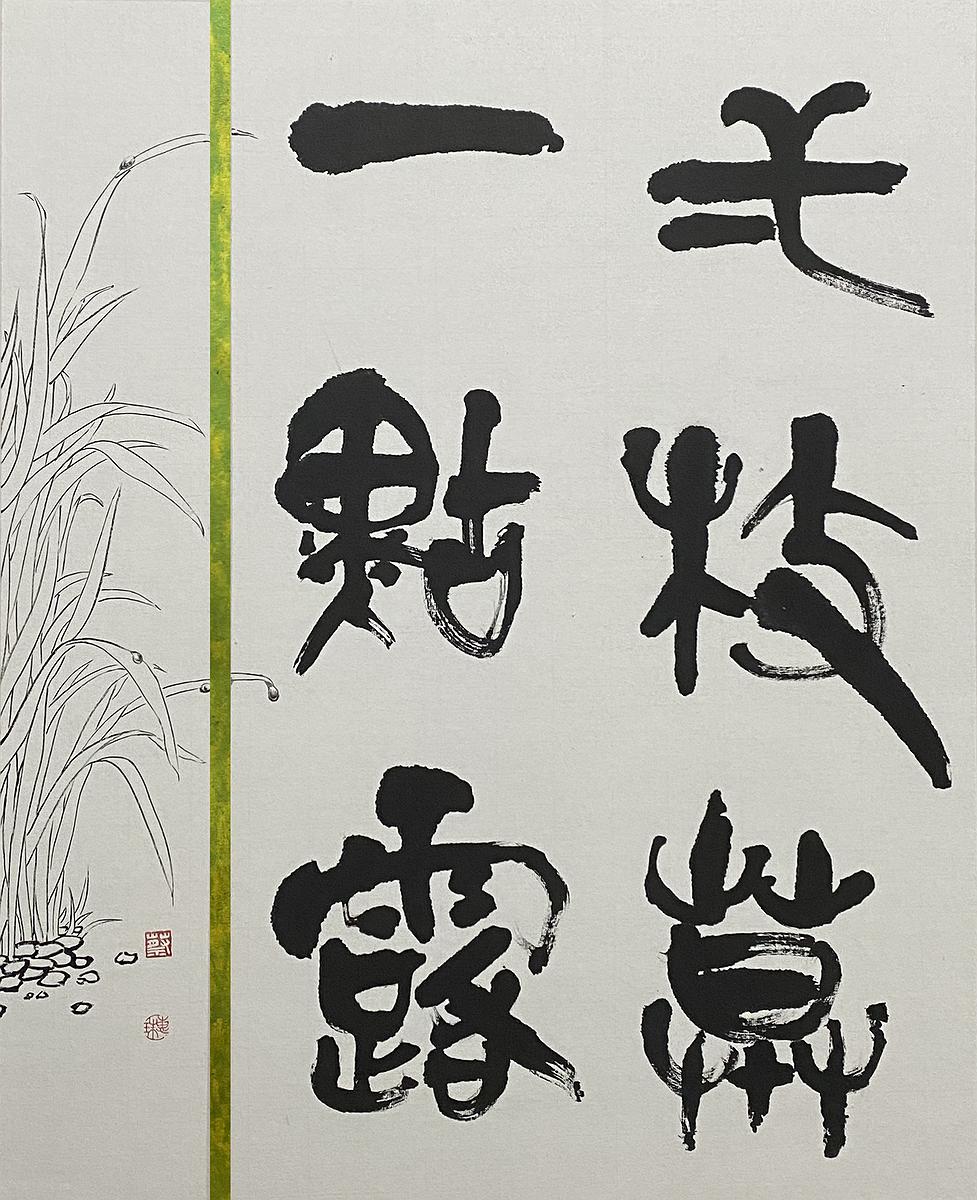
The art of calligraphy is closely ingrained in life as the origins of Chinese characters stem from life. What calligraphy conveys is beyond linguistic import, but it also contains messages of beauty. In addition to its function of documentation and communication, calligraphy also serves the purpose of education, cultural inheritance, and artistic expression. The dynamics of life give rise to the aesthetics of calligraphy, and Chinese characters as the vehicle of calligraphic expression enriches the viewers’ visual experience with its typographic forms and imageries. Calligraphy, with its emotional content and delightful evocations, awakens our aesthetic awareness, elevates our experience and further beautify and enrich our life.
Calligraphy creation is rooted in everyday writing to express moments of enlightenment through the use of pen brushes with an aim to communicate one’s inner emotions, thoughts and spirits. In terms of meaning, calligraphy can be said to be a kind of “Observation of Life”. The external forms and inner significance of calligraphy extend beyond the individuals and the society and reach the universe to cover all realms of all there is. Shi Tou, a Qing Dynasty calligrapher, said, “Center and solidify one’s spirit through calligraphy and gain insights on how to live through brush strokes.” Life is the biggest source of nourishment for creation; life offers the most inspiration. The paper is created based on the life experience of the author who observes life to seek enlightenment and inspiration and attempts to experiment with various calligraphic forms, mediums, and expressions, as well as recording one’s thoughts and feelings with pen brushes for further exploration and implementation.
The author’s calligraphic works can be divided into the following four series:
1. Everyday life depiction: take moments of epiphany in one’s everyday life and document it via calligraphy and express the integral sentiments within.
2. Taiwanese proverbs: embody the optimistic and lively life attitudes of the Southern-Fujian Taiwanese through amusing shapes and forms of the characters.
3. Still-the-mind writing: write down Zen masters’ proverbs, quotes and scriptures to keep oneself alert and settle one’s body and mind.
4. Amusing combination of words: use integrated elements of typography, calligraphy and painting to express the fun union of words in modern usage.