Human judgments on the structure and form of things come from their past experiences and what they have seen. The structure behind the memory could be roughly divided into an external outline and internal cognition. And inner cognition is often one of the significant keys that affect the way of seeing. We may think so: what people see in their eyes is not just the existence of pure physics, but includes our experience and memory of its past and its existing state. In other words; our “seeing” and “perceiving” are intimately intermingled in an intricate cognitive system, and finally turned into personal “real” experience and vision.
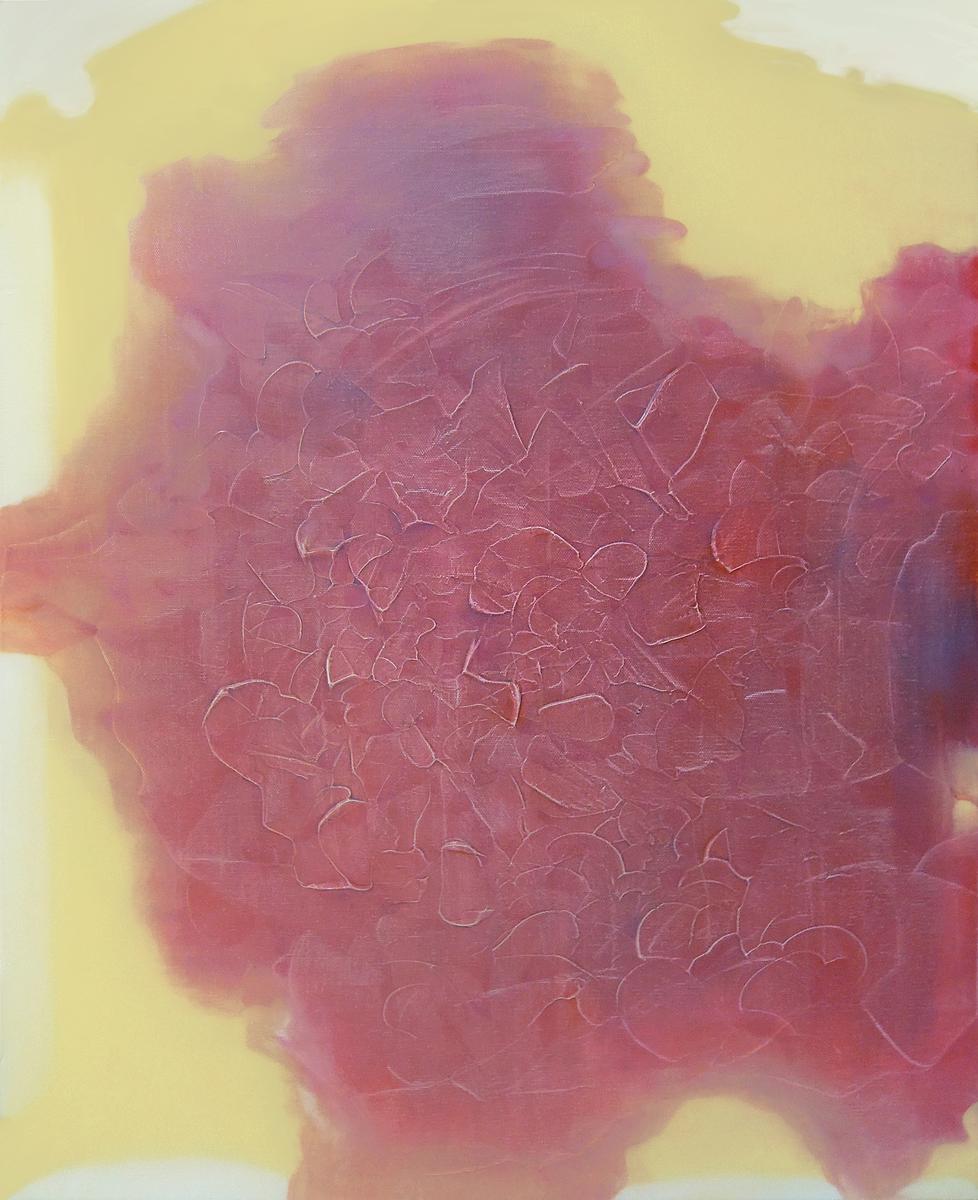
However, in the contemporary visual world, seeing is no longer seems to be pure eye movements. Despite the fact that the “Digital World” provides a broader visual experience for us, it also invisibly limits our perception development. That is to say, as we face the world that is gradually going virtual. What we see and feel seems to be just a deviation of reality, and is no longer a pure experience. The theme of the thesis, Floating Scene, discusses the “distinct and obscure” of contemporary images. Regarding the work, the artist re-translates these everyday images through various “obscure” painting techniques; and then uses the “deformed painting technique” to achieve a visual/meaningful deviation, driving the extension of the meaning of the picture. Moreover, when facing these uncertain things, the audience must escape from the original stereotypes and return to the perception experience (memory) to understand the various images in front of them. In the era of information overload, the artist hopes to evoke a deeper memory through the above creative methods.
The thesis is divided into four chapters, and the first chapter, “Before Painting”, is the preparation that the author made before painting, and contains the position of painting which must be understood in contemporary art. In the second chapter, The Metamorphosis Scenes, is about the scenes consisting of memory, emotion, and perception, and as one main method of painting in the series works, “metamorphosis” is an emotional description. Then the third chapter, Space Deployment discusses how the works combine the composition forms of painting, photography, and film, and constructs a scene carrying various deformation content. Finally, chapter four, Organic Scene, extends the relationship between painting and body in chapter two and discusses the organic characteristics of the painting strokes and the haptique of the work itself.