In recent years, the trend of producing exhibition has changed from static cultural relics to sensory cognition and emotional connection of the audience. By the interpretation of exhibition, context and the transformation of space, the audience can easily realize the meaning of an unfamiliar exhibition and connect to their own life experiences or emotion. In this case, building an effective-interactive communicated exhibition has becoming an important topic to every curator and display designer.
This study attempts to apply the concept of the semiotics to the presentation of the subject's performance, and explore the way to convey the meaning and cultural context of core themes in physical space. Based on "Marine Fish Conservation" as the theme creation, the researcher of this study has converging many reasons for the disappearance of fish diversity, such as climate change, overfishing, environmental pollution, citizenship and so on. These main reasons will serve as the core narrative, and the above-mentioned themes will be turned into physical works through infographic design and semiotic method and presented in the exhibition space.
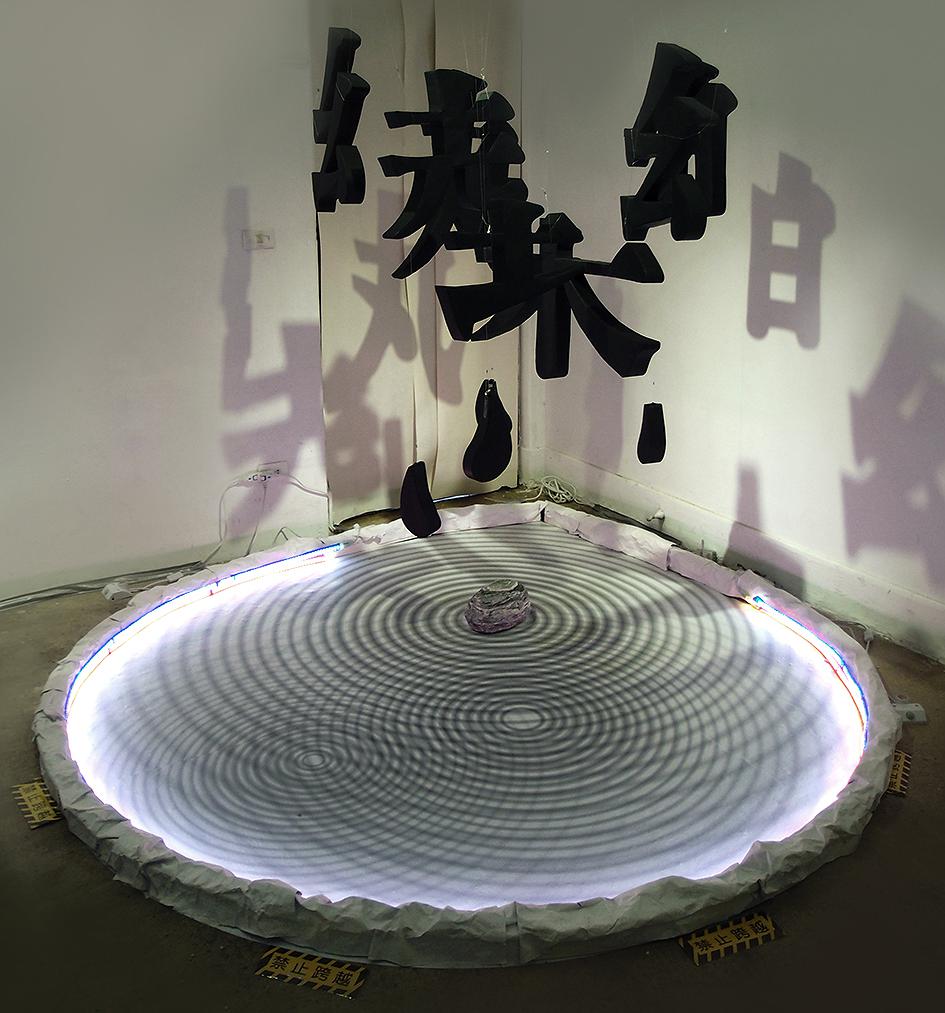
For examine the relevant display cases, the inductive analysis was carried out in the early stage of the study by applying semiotic method. At the same time, the contents of relevant scientific literature will be compiled with a series of display works had been created. Such as "Infographic of Ocean", this is a large-scale installation with 12 pieces of infographic design. Both the "The Sounds of Water" and " Fish Viewing with Joy. About the Heat" are interactive works. "Kids Drawing Fish Market" is a work that is open to the visitors. " Ceramic plate with fish" is a combination of fish and ceramic plate design, is part of the application of cultural and creative product design. The second stage is to conduct the study of the layout of the exhibition from the perspective of curation, the planning of the moving line, the presentation of the works and the design of the spatial context.
According to the research, there are three main points summarized as follows:
1. Visual-code applications shape the context of the display space: Through the construction of the display situation, the relationships between the display moving lines, the work and the issue are enhanced, and the viewer's understanding and resonance are enhanced by the immersive situation display.
2. The infographic designs inspire viewers to enjoy reading: Visual layout and graphic narrative methods are used to allow viewers to read messages with ease and joy, and have fun in the process.
3. Technological materials deduce the interactive relationship between the works and viewers: In order to help viewers understand and communicate on the topic, this study encourages participating in the display and let viewers try, explore, think and learn actively.
In summary, the researcher will anticipate this study to provide a reference for curatorial planning and display strategies for future practitioners.