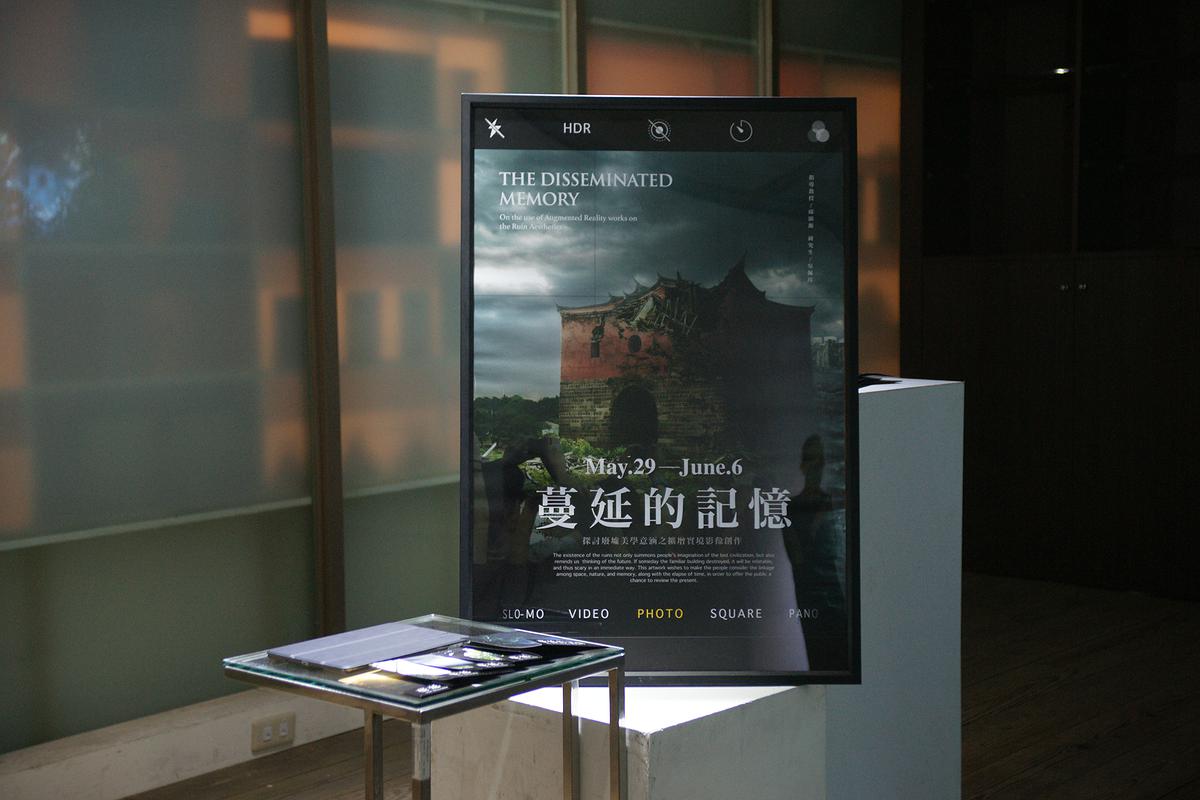
The abandoned old buildings covered by vines and green trees can be easily seen
everywhere in Taiwan, but most people have not asked why these “ruins” are so
dilapidated and decayed to be seen in front of people’s eyes. The eighteenth-century
philosophers, poets, artists, architects and rulers—while gazing on the ruins of the
Colosseum—cannot help but feel the rise and fall of this space, and they experience the
fact that the human advancement can do nothing about overcoming the elapse of time.
Meanwhile, this seems to remind us of further considering that such great architecture
cannot help but suffer the dilapidation of time, not to mention the fragile mankind.
Moreover, archaeologists have long been excavating the traces of civilization from the
ancient relics. If they can understand the reality of society and human development in the
past, whether can we, through the means of observing the future, offer the public a chance
of reviewing the present. Hence, the present creative work and study attempts, first, to
analyze the elements and factors that constitute the ruins through literature review. Also,
through the means of image synthesis, the work can encompass a future ruin synthesized
by the Taiwanese historical landmark and landscape of people’s collective memory in an
attempt to pull the timeline into the future and then allow the mass people to watch the
scene of ruins of the current buildings. The use of augmented reality permits the
spectacles to feel the atmosphere from the series of the present work as if they were in
the scene. The researcher wishes to make the people consider the linkage among space,
nature, and memory, along with the elapse of time, in order to offer the public a chance
to review the present.