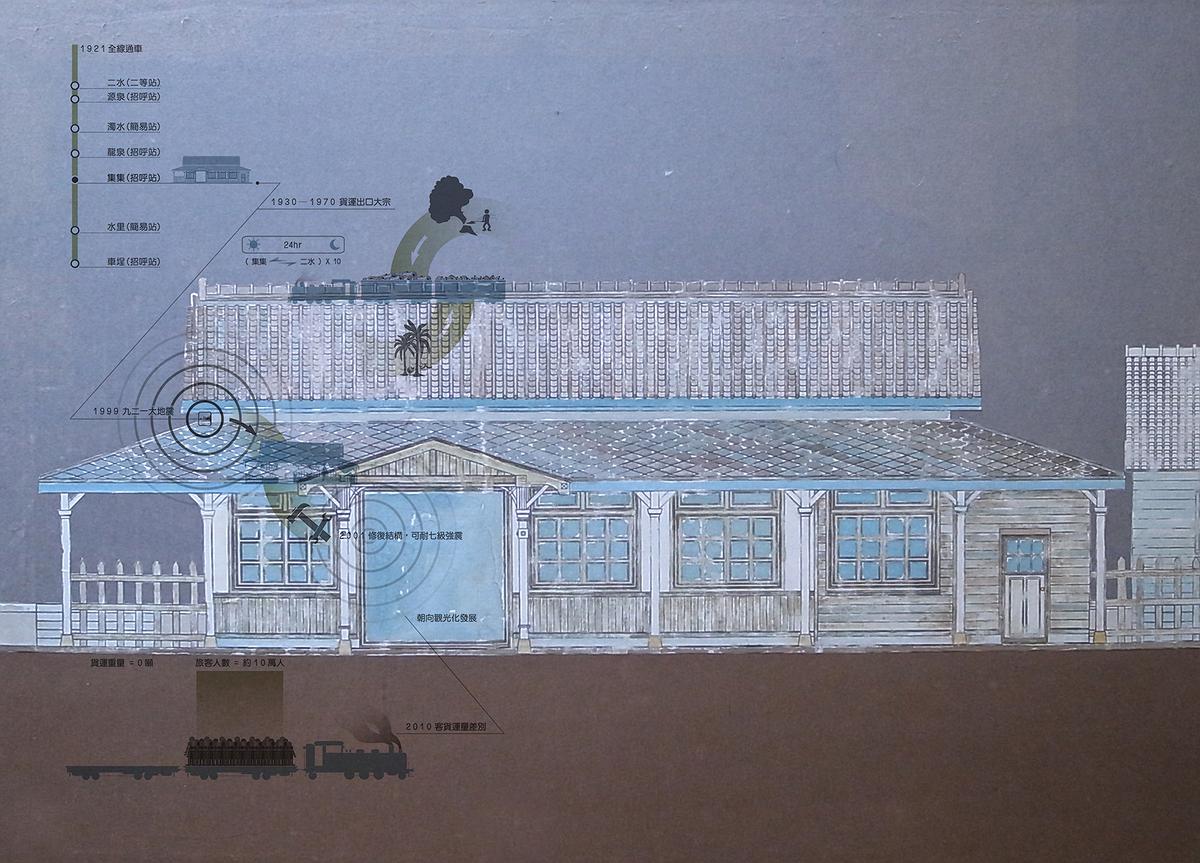
The current research first examines the background of inforgraphics, and then it bases itself on the shared features of inforgraphics and visual design in an effort to represent the theme of Taiwanese railway cultures using inforgraphic representations. It is with the goal of reconstructing the understanding of Taiwanese railways’ background and cultures that the researcher created a series of inforgraphics characterized by various local railway cultures in Taiwan. This thesis is divided into five chapters, including Introduction, Literature Review, Railway Cultures Embodying Local Cultures, Artist Statement and Work Display, and Conclusion. The review explores both inforgraphics and railway cultures. The definition of inforgraphics is first clarified along with its historical background, various categories, and analyses of works employing the technique. The review further examines assets and features of the Taiwanese railway cultures, the small-scale train stations that were common during the Japanese Colonial Period in Taiwan and other related art pieces. The two tracks of reviews serve as the foundation of this project. After organizing the characteristics of techniques that different railway cultures in Taiwan use to represent themselves, the designer selected the significant ones during the colonial period for this project.
This project, titled Place‧ Beginning, aims to recollect memories of the railway cultures in various parts of Taiwan, thus enabling the public to feel and further understand the impacts that train stations have on their local communities. By visually depicting the small-scale stations during the colonial period using rubbing, the designer formed the quaint charm and the trace of time of those antiquated stations. Inforgraphics operates as a communication-enhancer through its visualization process that lifts all language barriers and effectively conveys and emphasizes the intended messages. Thus, it allows its audience to grasp the underlying messages of its works despite potential language obstacles in different cultures and might even enable them to interact and communicate mentally with the works.
Key words: inforgraphics, railway cultures, localization