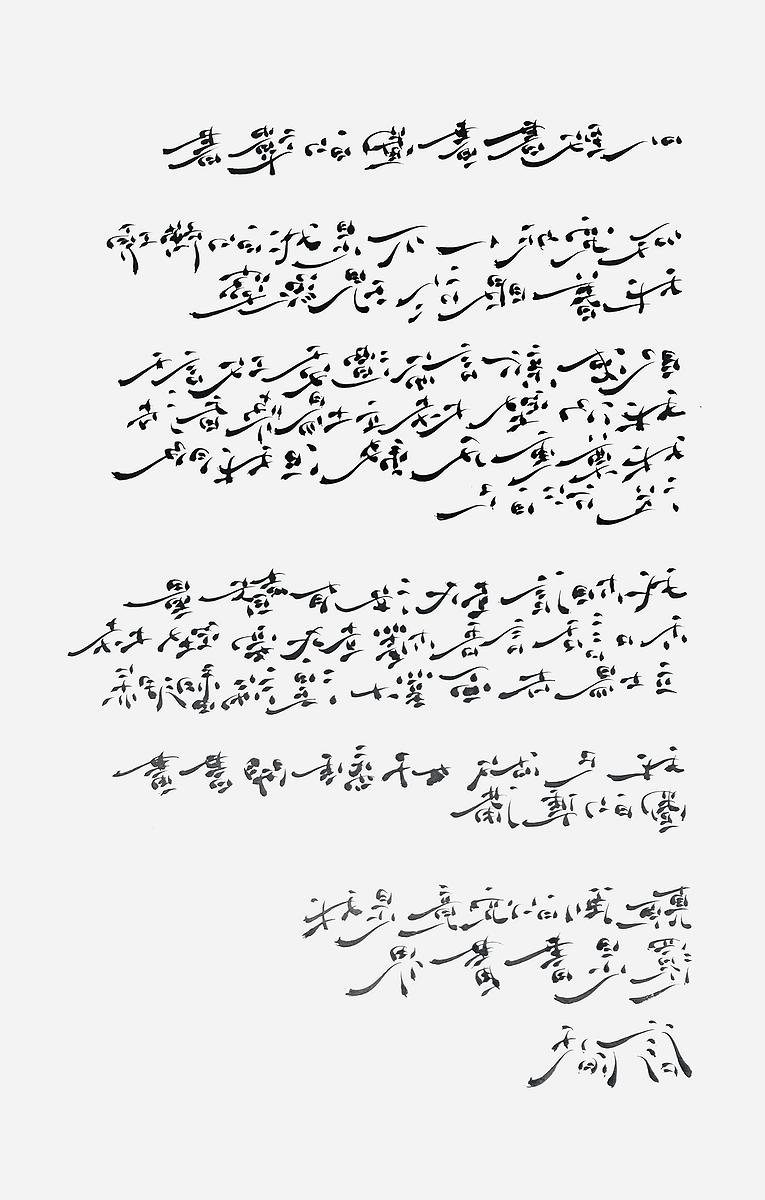
This paper explores the issue of how the interpretation process of calligraphy texts, or characters as a specific form, is consciously directed when facing the viewer, and the state of the interpretation process as a conceptual mapping framework. The nature of this mapping is related to the concept of self-otherness in the context of intersubjectivity, and connects to the mapping relationship between text and viewer; it refers to the text not only as a carrier of self-concept, but also what kind of concepts the viewer continues and generates when the text faces the other, thereby revealing that calligraphy is based on the author's presupposition of the other and the otherness of the riddle to the other, and the result that the riddle is always a riddle. And this kind of position presupposed by the author, and the conceptual items carried, continued, and continued by the text when it is used as a conceptual carrier, will directly point to the nature of the riddle; it aims to interpret the relationship between the text and the viewer in the process of interpretation. Among them, the text is the object for the viewer to solve the riddle, and it also reflects the intersubjectivity based on the other's otherness, and obtains a cognitive experience different from the self-subjective consciousness; and the concept of intersubjectivity is only different from the carrier item and the nature of the manifestation.
Therefore, based on the nature of the text carrying concepts, the part continued by the viewer's intention will make the original concept of the text constantly differentiated; another directly refers to the nature of the riddle as a riddle to be clarified, and constantly interpreted by others, and leads to the relationship between the riddle as a process.
And this kind of structure based on the text of the text, which leads the concept to differentiation, is also related to the narrative nature as a postmodern narrative framework, the category of meta-narrative, and the question of the definition of the narrative nature different from the subordinate of the time sequence; it reveals the concept of weakening classification, declassification, and liberation of the formalization of calligraphy forms, so that related narratives are constantly differentiated, until the nature of the riddle and even its process itself is used as a guide to delegitimization, and the result of narrative saturation.