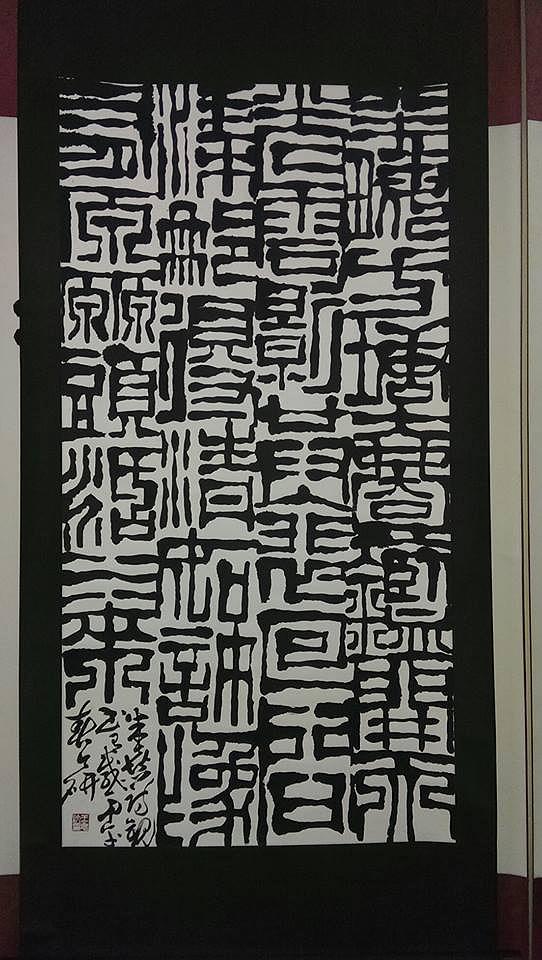
Calligraphy art, a unique art form of the Chinese ethnicities, has strong ethnic characteristics and its spirit keeps changing over time. Creating calligraphy works and shaping the image of calligraphy can even be regarded as ways to model Chinese characters. At first, calligraphy works are created based on dots and lines. Then, the beauty of mountains and rivers, plants and trees as well as birds and animals are incorporated into the calligraphy works. The beautiful melody and rhythm of music, drama and dance are also interwoven into the works. In the meantime, calligraphers’ subjective thoughts are blended into the works, which enables the image of words to combine with calligraphers’ writing styles. Natural beauty is thus transformed and metamorphosed into an abstract appearance and image. Therefore, Chinese calligraphy is a philosophical and vivid image that looks like painting but is actually not.
Based on the theory of the common origin of calligraphy and painting, this study combines calligraphy with painting and attempts to find a balance between the virtual and the real, the abstract and the concrete. Through the observation of natural landscapes, the similarities between natural landscapes and calligraphy are discovered and then incorporated into calligraphy and painting creation. This study is divided into five chapters. Chapter 1 is introduction, including the research background and motivation, the research purpose and the research scope. Chapter 2 presents a review of relevant literature, while Chapter 3 describes and analyzes the methods used to create calligraphy and painting works. Chapter 4 demonstrates a number of calligraphy and painting works, followed by Chapter 5 drawing a conclusion of the study.