Before the invention of photographic technology, humans could only depict the people, events, and objects they encountered through painting or sculpture, faithfully inscribing them on cave walls or everyday items. As time progressed, the 17th century saw oil paint replace tempera, and canvas take the place of wooden panels, enabling artists to explore more diverse and expressive forms of painting. By the 19th century, the rapid development of photographic reproduction technology brought a profound impact to the field of visual art. Photography, with its unprecedented speed and precision, captured the fleeting moments of the real world and quickly became an essential tool for recording memories and preserving images in daily life. It not only reshaped the way people observe and document reality, but also compelled artists to reconsider the nature of painting and the value of its creative form in an era increasingly dominated by mechanical reproduction.
This research explores realism and photorealism in painting, utilizing photography and digital imagery as auxiliary tools to translate everyday observation and inner emotional perception into visual expression. The study focuses on the essential differences between image-based and painterly representations of reality, and through the medium of painting, aims to shape an irreplaceable sense of aura and existential value that cannot be mechanically reproduced. This forms the foundation of the creative practice undertaken in this research.
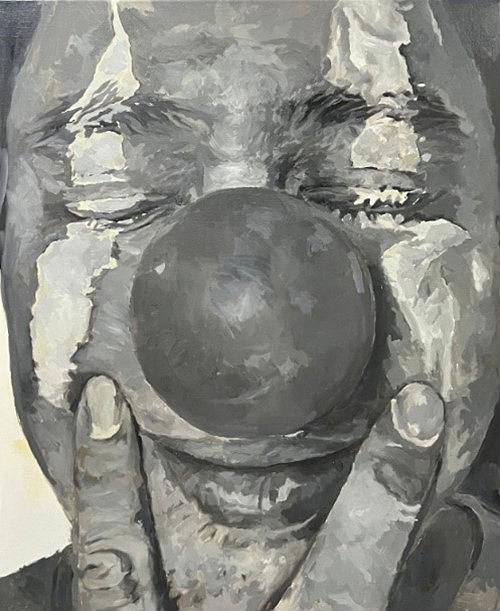
The works in this painting-based creative project employ a figurative realist approach. Through meticulous attention to detail and the nuanced treatment of light and shadow, the paintings closely approximate the visual-tactile presence of observed reality, while also conveying the artist’s creative thought process and inner emotional vocabulary. This research thesis is divided into five chapters: Chapter One: Introduction – This chapter outlines the research motivation, objectives, and scope. Chapter Two: Theoretical foundation and literature discussion; from realistic painting to the transformation under the replacement of photography technology, analyzing the concepts and psychological vision of the realism movement to the code symbols of the Dutch empty still life and the development of American photorealism painting and the influence of Taiwanese painting art. Chapter Three: Discussion on the creation of "Artificial Nature" paintings; analysis and explanation of the expression of the aura and existence of paintings, as well as the painting media, expression techniques and painting process of creation. Chapter Four: Creative Forms and Content – an analysis of the thematic content, stylistic characteristics, and painting techniques of the three series in this body of work: Portraits, Traces of Time, and Language of Flowers. Chapter Five: Conclusion and Future Prospects – This final chapter summarizes the research findings and offers reflections on future directions for continued creative and academic exploration.