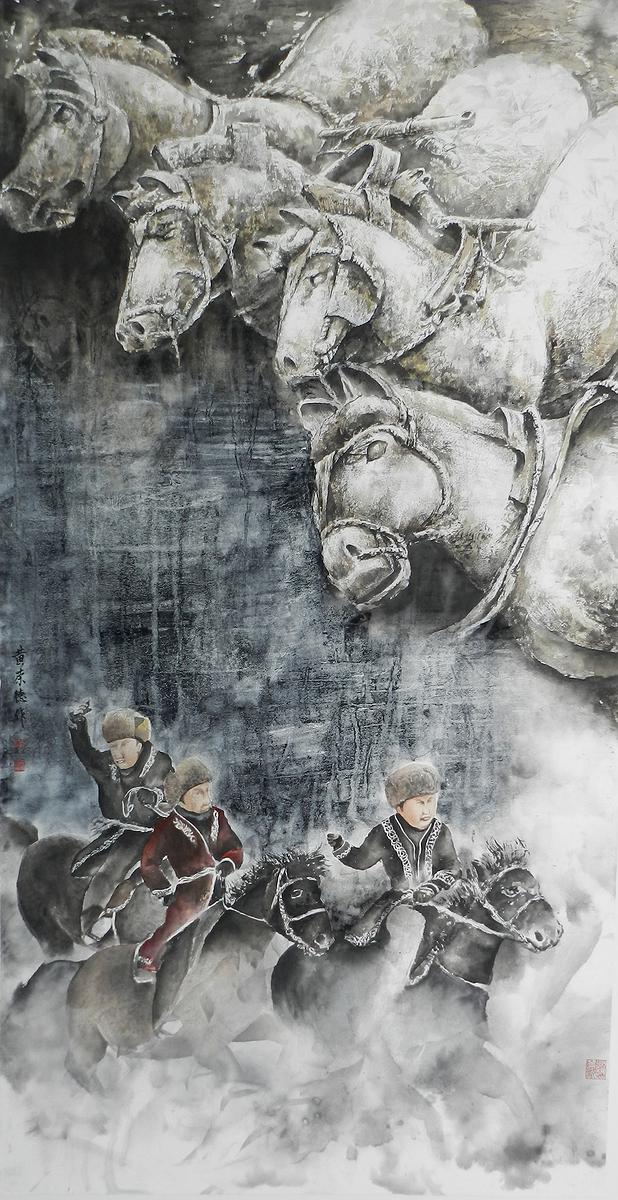
Aesthetic standards are more conceptual than material. Traditional Chinese paintings give their viewers boundless imagination with the exploitation of spatial imagery. Moreover, through the perspective of the painters, an objective image presented as imagery is carefully represented in front of the viewers via painting brushes and ink. This process reflects a painter’s affection and character. Thus, this research sets out from the interpretation of imagery in primitive paintings and the discussion of how each dynasty’s painting concepts impact the creation of Chinese Brush paintings to the future impact of imagery on the author’s creation of mental images.
In addition to the explanation of imagery, the formation of images is
well-illustrated, including causes and factors of the formation of images at a spiritual level. Aesthetic standards formed by mental space are later demonstrated according to the states of mind.
On the basis of the paintings with imagery, the author thus refers to the reflections of ancient critics on paintings in the discussion of imagery. First the author illustrates images and imagery respectively and then has a general discussion. Since imagery is a kind of mental activity, the authors has an overview of painting concepts from Wei and Jin Dynasties to Ming and Qing Dynasties. Aesthetics needs to be considered when it comes to the demonstration of imagery. Hence, the origin of imagery, the context of imagery, concepts of space and time, aesthetics and the author’s experimental artistic creations will be presented and discussed as well.