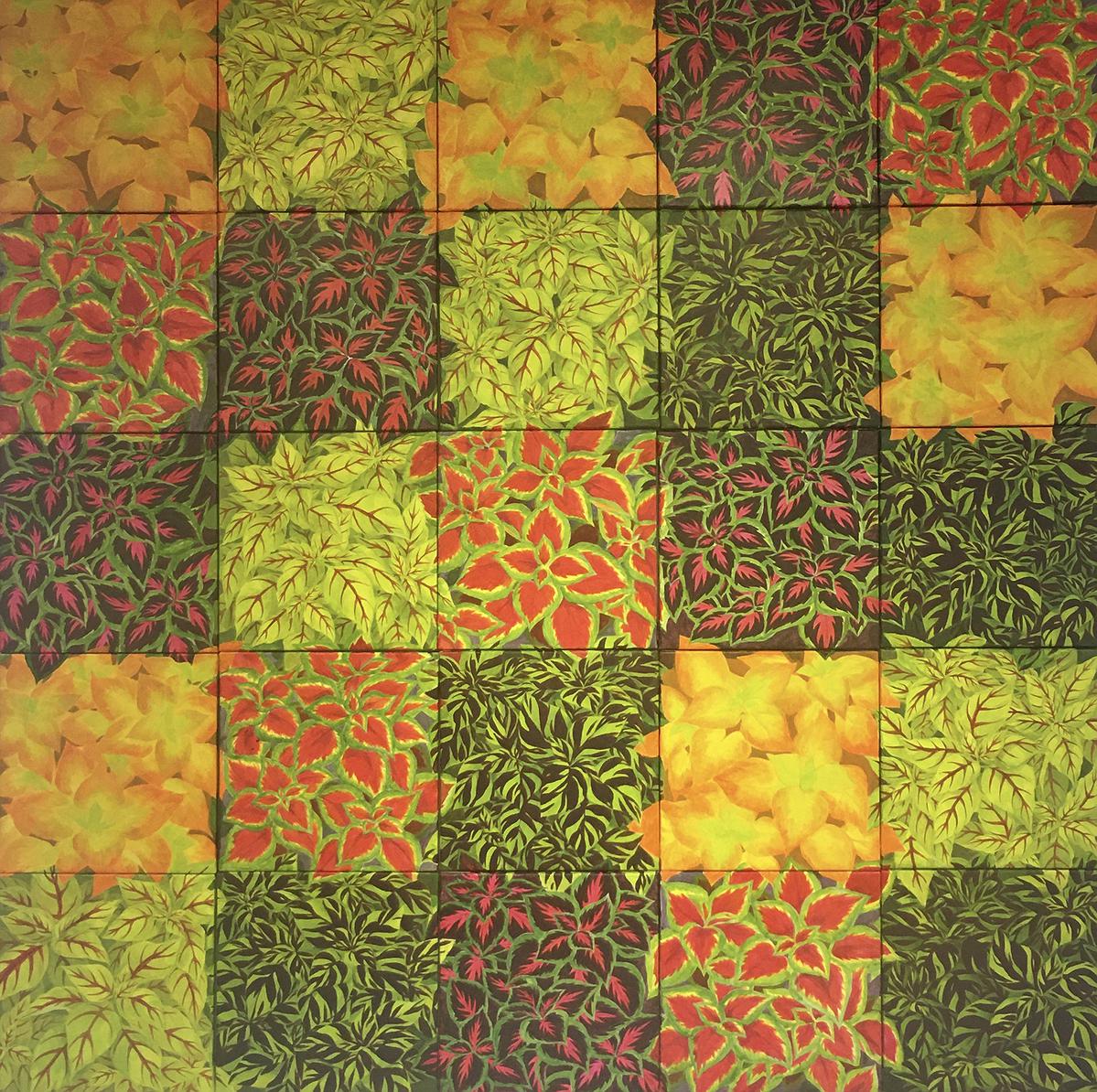
Plants play an indispensable role in human life, providing food and oxygen for human physiological needs and contributing to the development of art forms and ideas. In the history of art, plants have evolved from being decorative objects and architecture in the early days. to be used as backgrounds in paintings, to being given different symbolic meanings in still life paintings in the nineteenth century, and to the use of plants in contemporary art. In the author's daily life, plants are often presented in the form of common landscape plants planted in pots. In this discourse, the author has used these plants as the subject of creative work, and through the observation of plants and the author's perception, it is transformed into a personal visual reproduction.
This creation discourse " Imagery of Plants in Corner House " is divided into five chapters, in which the author takes house plants that can be seen in daily life as the object of observation, observes the appearance of the plants themselves, as well as the color changes and growth state under various kinds of light, and presents them in the form of flat paintings. The first chapter is the introduction, which describes the author's motivation and purpose of the research, the scope and limitations of the research, as well as the methodology and structure. Briefly describes the role of plants in the author's daily life and the emotional relationship to plants. The second chapter is the theoretical foundation, which helps the author to deepen the theories, aesthetic concepts, and forms of expression in creative work through the exploration of literature. The third chapter is about the concept and practice of creation, describing the author's viewpoints and applications in creation. The fourth chapter is the analysis of the author's works, which analyzes the author's ideas and contents in the creation. The last chapter is the conclusion, through the theoretical analysis and the practice results of the creative research, the author is expected to have more development in the creative work.