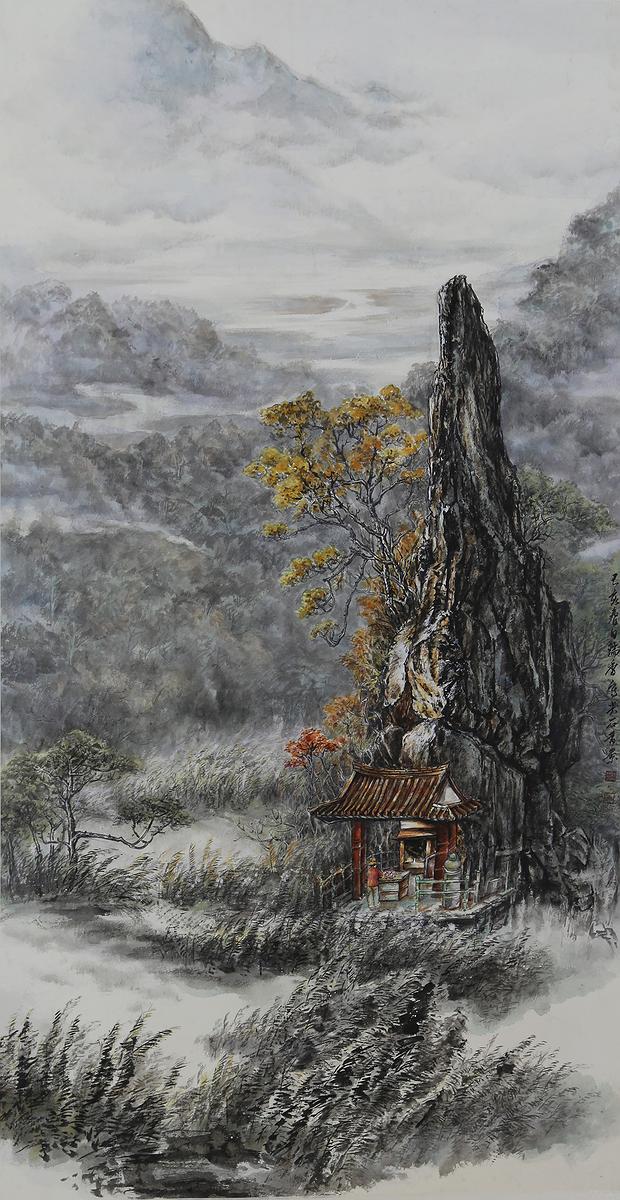
By the means of creative ink paintings, and the use of humanities stories, historical communications, unique people, things and objects as the theme combining with my feelings and memories of the past, I have documented the environment, memory and the beautiful native culture of Jianshi by ways of live sketches to achieve the following research purposes.
First, to understand the humanity of Jianshi, care for the original natural environment of the town, and convey the concept of coexistence between human and nature. Second, to lay the foundation for traditional ink painting by exploring the theory of painting and carrying out literature discussion to enhance and widen the essence of artistic creation. Third, to reflect on this concept in order to explore the building of the creative context.
The paper is divided into five chapters. The first chapter, "Introduction", sets the direction and introduction of the whole study, explaining the research motivation and purpose, the research content and scope, the research methods, and the definition of nouns.
The second chapter is "The Discussion on the Foundation of Creative Theory", which explores the evolution of ink painting from a natural perspective. The aesthetic concept of landscape creation through painting and humanistic care of the East.
The third chapter is "The Recording, Creation, Thoughts and Practice of Jianshi Humanities", which states the authors thinking during in the creative process.
The fourth chapter, "Creative Practice and Analysis", is based on the humanity of Jianshi and is divided into two series: "Stone Love Stream" and "Communications of the Mountain Tops". The humanities research, creative concept, creative process, techniques, and media resources are interpreted by myself, respectively.
Chapter 5, "Conclusions", examines and analyzes the research results of this thesis, and reviews the thoughts and experiences of the practice process along the way to explain the direction of future development.