Abstract
This thesis, entitled The Imprint of Vastness, aims to explore the expression and significance of the sense of vastness in contemporary oil painting. It endeavors to integrate the aesthetic conception of vastness found in Eastern literature and painting with Western oil painting techniques, thereby creating an artistic language interwoven with cultural depth and personal emotion.
The study begins with an analysis of the imagery of “vastness” in Eastern literary and traditional painting contexts, examining its underlying philosophical thought and aesthetic characteristics. It then contrasts these qualities with the treatment of space, color, and atmosphere in Western modern oil painting. Particular focus is given to the works of overseas Chinese artists such as Zao Wou-Ki and Chu Teh-Chun, whose practices innovatively merged Eastern sensibilities with Western media to advance abstract expression.
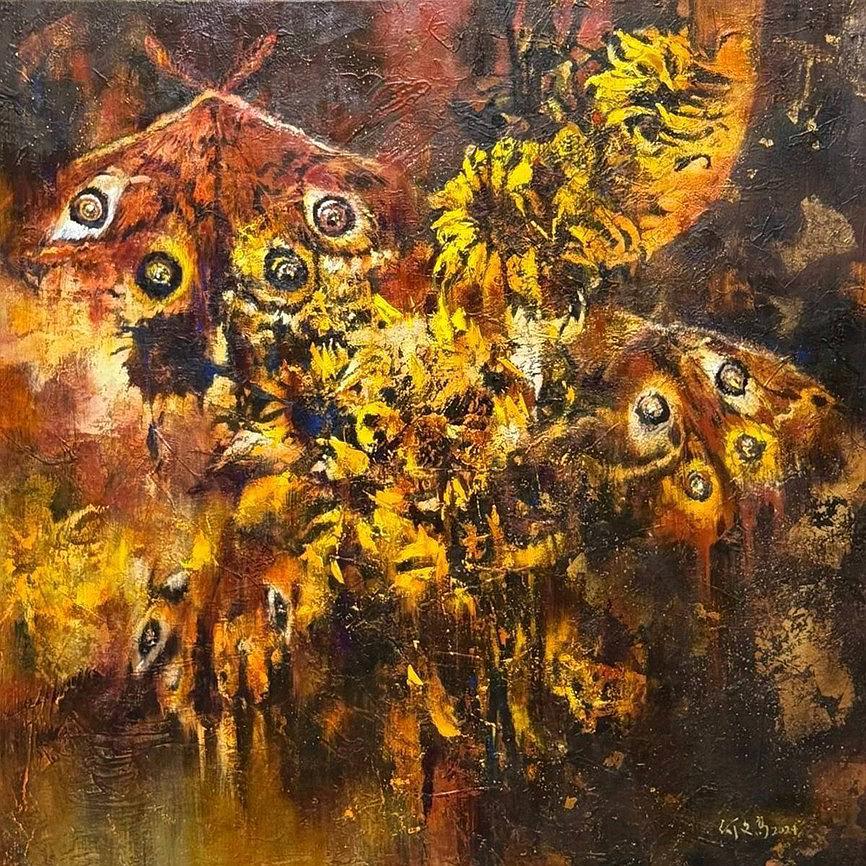
This series of creations centers on four stages—childhood, the years of growth, the blossoming and withering of flowers, and the sentiments of journeys—which symbolize the emotional memories and transformations of thought across different phases of life. The works attempt to leave traces of life’s continual flow within the pictorial space. Through the interweaving of artistic practice and theoretical reflection, this thesis contemplates how art can carry life experiences and emotional depth, thereby inspiring viewers to rediscover and resonate with their own sense of existence.
This study not only provides a new interpretive direction for expressing the sense of vastness in oil painting but also endeavors to build a bridge of dialogue between Eastern and Western cultures, expanding the possibilities of artistic expression.
Keywords: sense of vastness, oil painting, Zen