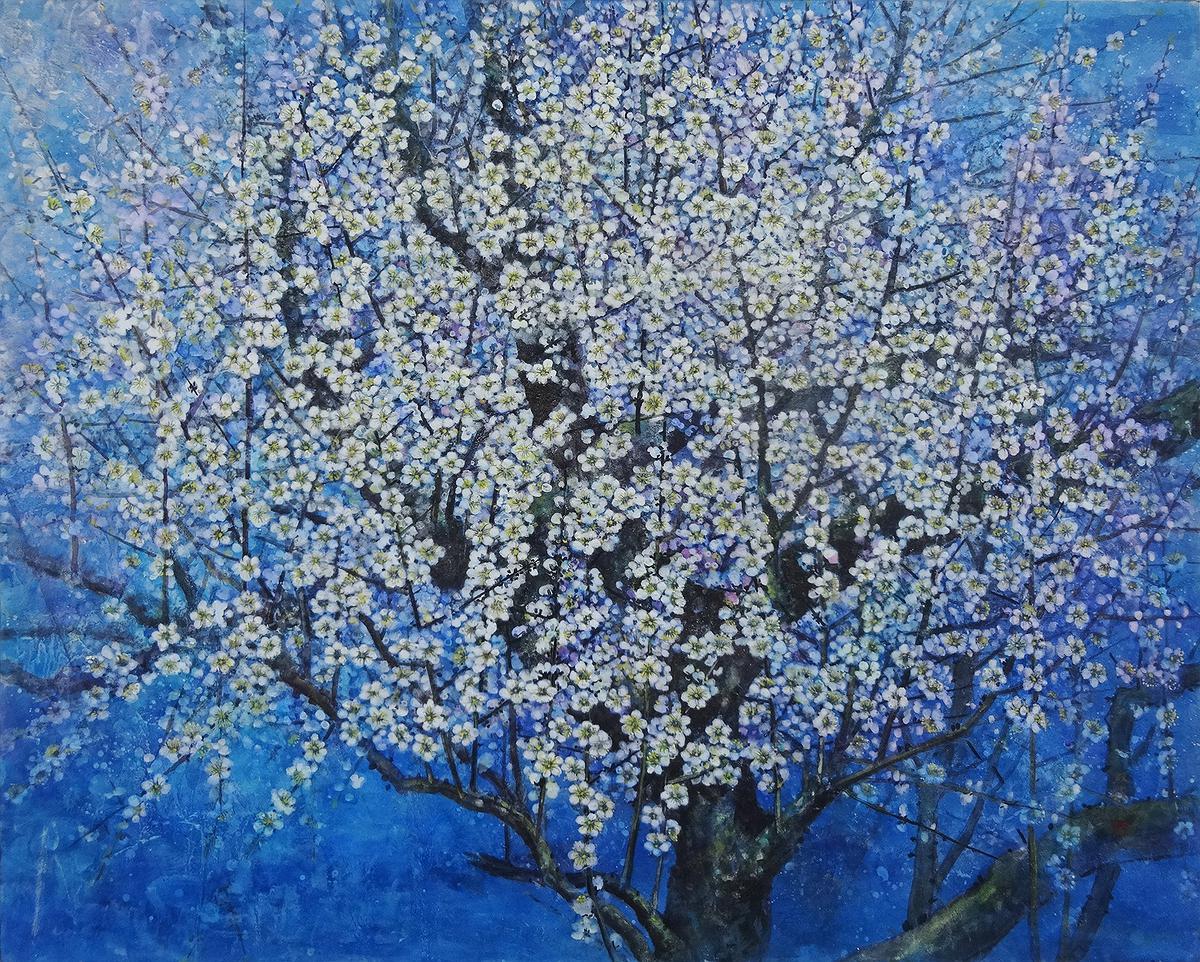
The traditional Chinese paintings differ greatly from Western paintings in the expression form of light and shadow, the traditional Chinese paintings utilizes pen and ink to express through the change of light and shadow as well as the twist of line, which are the inspiration of mind and the experience of subjective affection. With the expression technique of image light and shadow, it reveals the brightness and darkness in the contrast of black and white, the shadow is not emphasized and painted deliberately but still exists, it is the unique aesthetic standard in Chinese painting. In western countries, however, light and shadow are very important elements in painting which are expressed in a way close to natural realism. Ever since19th and 20th century, influenced by oriental and western communication, oriental paintings started to explore the expression form of light and shadow in western paintings, thus various kinds of expression techniques appeared, which brings the new direction of development.
Focusing on the expression of light and shadow painting, this paper attempts to explore the expression form of light and shadow in Chinese and western paintings from Chinese ancient drawing theories, Chinese and western art history and works of artists in different times, hoping to gain inspiration and improve creativity. The structures of thesis are as follows:
First chapter is introduction, which explains the research motivation and purpose, research focuses, research methods and restriction, term explanations of light and shadow painting.
Second chapter is academic basis and literature review, which explores the manifestation of oriental and western light and shadow paintings in the attitude of understanding tradition and western countries, hoping to find concepts and techniques which can be regarded as reference.
Third chapter is creation idea and practice, which analyzes the creation idea and explains the application of texture materials, narration way of light and shadow shape and the process of creation and experiment.
Forth chapter is works interpretation, including 21 pieces of works, which are classified into four series, i.e., stone reflected in water, psalm of life, life image and romantic flower language, which are regarded as the explanation of creative thinking and expression of techniques.
The fifth chapter is conclusion. In addition to summarizing research results and creation experience, it makes self-criticism and reflection, and then proposes expectation of future development and builds new targets.