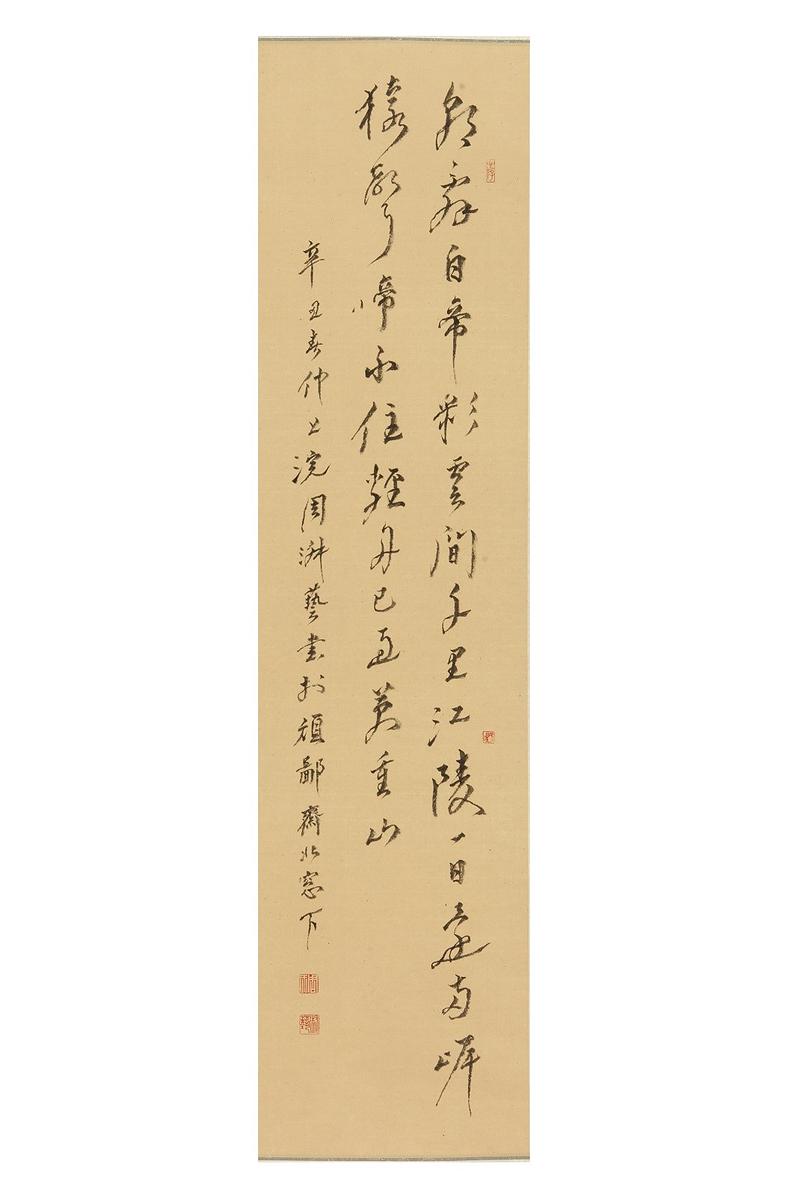
The art of calligraphy is expressed through the beauty of lines, and the wide variations in brushwork, ink, structure, and composition style imbues every individual work with aesthetic beauty. Through millennia, calligraphy has developed a unique sense of beauty and connotation. In addition to its external form that is pleasing to the eye, its innate simplicity is even more appreciated, allowing the viewer to resonate from the heart, forming an art with value.This paper explores the theme of "embracing simplicity and keeping tranquility" in the creation of calligraphy, such as the influence of Laozi and Zhuangzi’s philosophical views on calligraphy through "imitation from nature" , "emptiness and tranquility" , and "simplicity" , as well as the influence of Zen on the self-consciousness of the calligrapher (artist), and the pursuit of originality in works through the understanding of Zen.In the 20th century, under the influence of Western aesthetics, the form and content of calligraphic works were profoundly transformed, whereby Western aesthetics were incorporated into the art of calligraphy to strengthen the visual expression of calligraphic art through brush and ink techniques. This change saw an emphasis on the appreciation of the aesthetics of shapes and forms, and the continuation of classical heritage through the development contemporary calligraphic art, which is the focus of exploration and creation of this paper.
- Image
- Others
Please click or press enter on the picture to view the picture