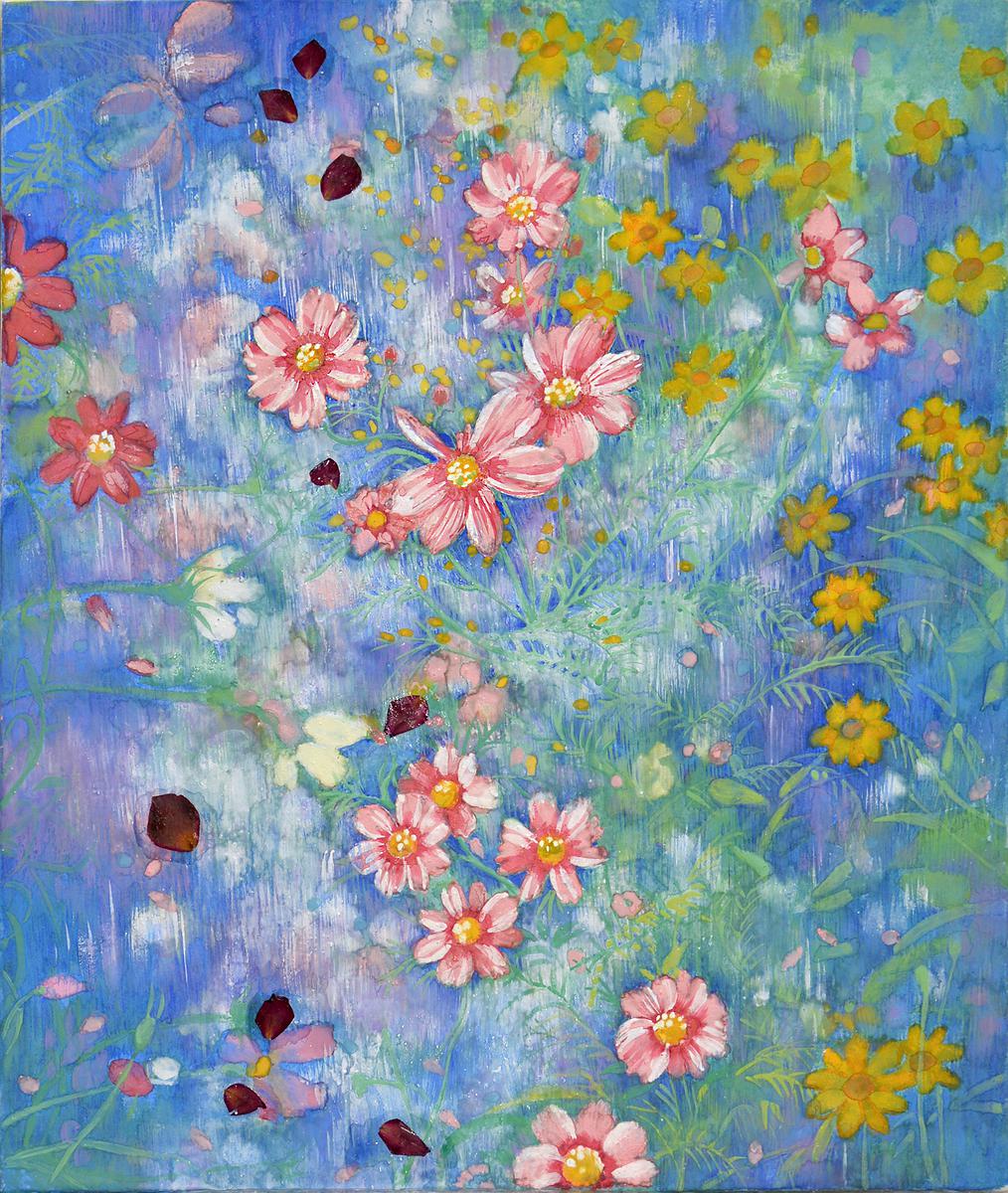
The study is an artwork discourse prepared by the author in graduate institute with the research topic in “Memory of the Layers Reflects the Flower” to convey the author’s comprehension and reflection on self, course of life and the environment through various forms of artworks in addition to analyze and discuss the issues. The author begins with the internal image and past memory in the paper and extends to the artistic psychology to analyzer the course of life and the impact of imperfections in life regarded by people and the unfinished affairs. Such analysis is applied to the painting of the author to thereby expound the viewpoints of the author.
The paper conducts specific discourse in five chapters. Chapter 1 Introduction: The chapter explains the origin of the creative concept, initial intent of constitution and formation framework for “The Memory of the Layers Reflects the Flower” Chapter 2 Analysis of Principles of Creative Concept: The chapter explains briefly the principles of painting supporting “The Memory of the Layers Reflects the Flower” and describes the association of painting presentation in accordance with the perspective of psychology and consultation. Additionally, this chapter adopts the implications of connecting the aesthetics of Wabi Sabi with paintings to discuss the artistic concept of the painting. Chapter 3 Artwork Practice and Analysis: Taking the analysis of artworks and the artistic concept of paintings as reference, the study discusses the association with artwork performance to explain the content and forms of performance for the author’s artworks. Chapter 4 Artwork Appreciation: The author explains the context and content of artworks in-depth through the outcome of artworks, presenting the subjective view on the passing, extraction and meaning of time. The chapter explains the corresponding impermanent vulnerability of life, stacking and changes of memory, the internal unfinished affairs, shadow, darkness, and brightness, Wabi Sabi, the beauty of seeing imperfection, new hope, and other painting topics. The author converts the slightly heavy and dark lessons encountered in real life through humorous and semi-abstract style of writing. Chapter 5 Conclusion: The study looks back the research course to digest, let the mind rest and reflect, in addition to proposing future prospects in attempt to maintain the energy of artwork and grow with advancement.